What is it that appeals within Hamilton’s work? Can it be simple juxtaposition of endearingly preposterous characters? Or is there a deeper ideo-exploration which intrigues the reader and draws them in? The following analysis utilises two of Hamilton’s best-known works to identify the narrative structure, tease out authorial tendencies, and speculate on Hamilton’s deeper meanings and ideas.
Before embarking upon a closer reading of these two works, it is useful to identify some of Hamilton’s common themes and techniques.
Much of Hamilton’s discovered works address the everyday commonplaces of post-modern life. His poetry and short-stories are generally set in the early 21st century, frequently in suburban or micro-local setting, usually featuring male characters of Western (most likely American or Canadian) derivation. Hamilton’s characters – especially his narrators – engage in activities which are ostensibly quite unremarkable: shopping at the local supermarket; walking through the snow on the way home from nowhere in particular; a conversation with friends, an observation of one’s living quarters. It is here that Hamilton indulges his creative flare, for the unremarkable in his hands becomes the unlikely, the preposterous, and the absurd.
What is the purpose of this savage yet unremarked twisting of the commonplace into the absurd? One of the immediate consequences is to cast into sharp relief the rehearsed and culturally-implanted responses we repeat in our everyday conduct, without always thinking about how or why we might respond in the fashion we do. Of course, very few of us always stop to think about how and why we might respond in the fashion we do. But Hamilton’s technique encourages us to at least think about our responses sometimes. There is an implication here that most of us parrot responses without consideration; that we are products of our post-modern society more than we are creators of it. And indeed, notions of modernity and traditionalism regularly appear in Hamilton’s work. There is at times a sense that Hamilton yearns to see ancient wisdom rediscovered; to set aside the superficialities of our day-to-day lives and to embrace a deeper, more profound sense of what it means to exist.
And what does it mean to exist? With such regular transformation of the commonplace into the absurd, it is easy to become distracted from this key question. Hamilton’s readers can find themselves so enchanted by the nonchalance of his characters that the ultimate purpose of his work can become obscured. Indeed, it is not unreasonable to suggest that Hamilton strives to obscure his ultimate purpose. Certainly the narrative structure which Hamilton frequently employs – not just ‘a story within a story’, but rather ‘three stories within a story’ – lends itself to particularisation, as one story with three different aspects fissures into three different stories.
There is no scholarly consensus on why Hamilton employs this tri-narrative technique. Some have suggested that Hamilton prefers to communicate through implication, suggestion, and self-reflection. Presenting three micro-stories within one narrative gives the reader a sense that Hamilton is gently nudging us toward some deeper revelation – a revelation which he will not explicitly reveal, but which he suggests we will discover for ourselves should we care to take sufficient time to reflect. Again, the underlying imperative for the reader is to stop and think.
That Hamilton should guide us in this direction without delivering his revelation suggests that for him ‘thinking’ is not a formal and structured process with a clear purpose and an identifiable start and finish, but rather an organic development, a latent act, the germination of an intellectual seed which can grow into enlightenment, but not necessarily intellectual enlightenment.
The question of being (or not being) ‘intellectually enlightened’ forms one of the key premises of one of Hamilton’s best known short stories, banking trouble. The narrator in banking trouble is concerned to demonstrate his intellectual superiority over a friend who is ‘a smart guy’. This immediately presents the reader with two key questions. The first is: what is it to be ‘smart’? The second is: what is it to be a friend? Many readers would argue that the latter question is of more personal significance than the former, and indeed it proves to be the penultimate question in banking trouble. Hamilton, however, is not interested in permitting the reader to consciously consider these questions. Rather, banking trouble embarks upon the relation of three micro-stories which do not explicitly invite contemplation of much at all, yet each of which quietly speaks to notions of intelligence and friendship.
It is important to note that banking trouble relates three stories to the reader by one character via another. That is, the narrator relates stories of events which happened to a friend of theirs. This poses issues of objectivity, clarity, and truth. Hamilton is asking the reader to accept the accuracy of the narrator’s account, an act which invests a considerable degree of faith in the intelligence and judgment of the narrator. Yet it is a frequent occurrence in Hamilton’s works – and banking trouble is no different – that characters undertake activities of questionable commonsense, react to absurdities with calm but equally absurd responses, and suggest courses of action or volunteer opinions which are palpably ludicrous. Naturally, this detracts from the reader’s sense that the narrator exercises intelligence and good judgment. In this fashion, Hamilton asks the reader to reasonably consider the testimony of somebody who is blatantly unreliable.
In banking trouble, this lack of reliability is only occasionally acknowledged by the narrator. ‘He was sitting around one day, reading a book, probably, and out of the blue the phone rang,’ Hamilton’s narrator relates. This ‘probably’ is one of the few instances in banking trouble where the narrator confesses that he does not command all of the facts of the story being related. More frequently, Hamilton makes the scarcity of intelligence and judgment explicit through the outrageousness of his characters’ nonchalant expositions. For example, banking trouble’s narrator relates his friend’s opinion that the ringing of a telephone was ‘a fluke of nature’ and ‘not foreseeable in the least’. Of course, the ringing of a telephone is in no way a fluke of nature and is entirely foreseeable. This lends the reader to ask: who is being preposterous here? Has the narrator simply injected these comments into the story, or did his friend truly make these comments, and is he really relating them as if they were reasonable responses to the ringing of a telephone?
Hamilton’s authorial stance in banking trouble is consistent in its absurdity: humorous irrationalism and casual disregard for the preposterous abound, while his characters are obscurely eccentric, endearingly self-deprecating, and occasionally (but pointlessly) pedantic. The narrator’s friend’s mother has ‘the fear of animals and viruses’; the friend himself knows ‘nothing of how to care for animals’ because the sphere of his knowledge is ‘limited to politics’; he comes home to find a cat has ‘eaten everything made of material’ and consequently he spends ‘a long night’ stitching up his business suits; his mother loses her wallet and worries how to ‘convince other people she was who she said’; he gives all his money away ‘to a stranger by email’, and subsequently has his account frozen by his bank after being falsely accused of ‘suspicious activities’. This concatenation of unlikelihood is presented to the reader as if it were mere and common happenstance.
The denouement of this tri-fold story is catalysed by what Hamilton describes as being ‘in love with the modern world’. After having had his account frozen, the narrator’s friend testifies:
‘I hadn’t been able to anticipate that, it being completely unforeseeable, like every other variable in my personal life that others can’t see, and so it fairly struck me a blow to my ability to breathe in my chest’.
But it is not the act of freezing the account which so appals the narrator’s friend, it is the bank clerk’s inability to understand or appreciate that the narrator’s friend had given all his money away to a stranger by email out of his love for ‘spaceships and TVs and online banking’. Prima facie, this is the act and explanation of a village idiot. What sort of person gives away all their money to a stranger by email, justifies it through love of online banking, and is subsequently affronted when others cannot comprehend this obscure affectation? Yet it is precisely here that Hamilton suggests caution in condemning the narrator’s friend as a village idiot, that perhaps he has been culturally induced to idolise spaceships and TVs and online banking, and that this inducement, in which the friend is the victim, gives rise to absurd or idiotic behaviours such as giving money away to strangers by email. The narrator’s friend in banking trouble is trying to do ‘the right thing’ as indicated by his cultural expectations, but these cultural expectations misconstrue the values upon which a fulfilling existence is based. In this instance, it seems Hamilton is suggesting that the narrator’s friend might benefit from spending more time thinking about how and why one should ‘love the modern world’ rather than embarking upon ludicrous schemes which are only vaguely related to reality.
This sense of ‘village idiocy’ is compounded by a tendency in Hamilton’s characters to state the obvious or otherwise extrapolate for no clear reason. Above we have seen how the narrator’s friend was ‘struck a blow’ which retarded his ability to breathe ‘in his chest’, a statement which clearly but ludicrously implies that there is another place in his body where he can breathe. Similarly, the narrator’s friend is ‘snoring’ in his bed ‘for the night’ – as if there is another location other than his own bed in his own home where he might otherwise be found sleeping. This is in itself not an absurd proposition, but the point of including the comment in the story is not clear. Likewise, while snoring away, he is inexplicably ‘dreaming of all the slurpees’ his ‘modest wages’ will bring – a comment which implies some severe criticism of the superficiality if not pointlessness of working for a wage. Likewise, he describes the bank he visits to clarify his account status as a ‘money bank’, implying that there may be some other type of bank he would visit to clarify his account status. Finally, there is the absurdity of the narrator’s friend’s ultimate explanation: that three largely unconnected episodes conspired to prevent him from voting – despite the fact he made it to the polling booth anyway. The narrator himself, much like the reader presumably, is ‘unconvinced and not impressed’ by the friend’s explanation.
Yet here we come to the crucial point Hamilton is making. Despite the absurdity, despite the excessive or obscure detail, despite the lack of clear continuity in the friend’s explanation for why he did not vote, the narrator does not press him on these inconsistencies, but rather inquires about his friend’s health in the face of such trials:
‘What could I say? A victor ought to be gracious in victory, ideological or otherwise, so I merely shrugged my shoulders and tried to transmit as much sympathy as a narrow heart can to my friend, after all, that is what friends are for, perhaps.’
And so we have Hamilton’s emphatic point: that modernity might be distracting or superficial, that culturally-induced thinking and response patterns might be inadequate, that people might be inconsistent or ludicrous in their explanations, but that the value of friendship has not diminished. In this, Hamilton justifies asking the reader’s indulgence of absurd characters and explanations, for although we might be surrounded by absurdity, it is the relationships we foster which give us an anchor from which we can drift in our search for existential meaning.
This is the kind of deeper philosophical exploration which furnishes Hamilton’s work with an interest which lasts. The weaker of Hamilton’s works are those which lack this compulsion, which ask the reader to indulge absurdity and preposterousness without the reward of lasting reflection. I must to England, you know that is such a work. Although it pursues the same tri-partite story structure as banking trouble, with similarly ludicrous characters enacting similarly absurd scenarios, I must to England, you know that lacks the real creative exploration which compels banking trouble.
I must to England, you know that relates three tales of teachers living in Moscow. Like banking trouble, I must to England, you know that presents its narratives via a narrator who is friends with the teachers rather than via the teachers themselves. Although each of these teachers behaves in a fashion which most readers would describe as unusual if not bizarre, the truly absurd character in this story is in fact neither the narrator nor the teachers, but the boss, who ‘believed anything anyone told him without question’. In this, Hamilton attributes to the boss a characteristic which contradicts his own existential role, for a boss who believes in anything and everything is unlikely to remain a boss for long.
Nonetheless, it is on this basis that a teacher of highly dubious credentials and questionable identity is flown into Moscow and given a class to instruct. Very little instruction takes place, but the absurdity in this instance lies not in the unlikely explanations the teacher provides for his failings, but in the boss’s refusal to confront the reality of his teacher’s refusal to work. Consider his response when told the teacher has been caught naked in class with a female student by one of the administrators: ‘Maybe it just seemed to you they were naked?’ and ‘Maybe they were really studying?’ Similarly when told that the teacher has failed to attend his own class, the boss asks: ‘But what’s his teaching like?’ and ‘Is he a good teacher?’ When for a third time the teacher fails to attend his own class, the boss finally fires him at the behest of the office staff, who threaten to leave otherwise.
What is the purpose of this sustained absurdity? In banking trouble, the narrator acknowledges (some) inconsistencies in his friend’s tale, but chooses to overlook them for the sake of friendship. In I must to England you know that, the narrator never acknowledges the inconsistencies, and never rationalises his choice to overlook them. Rather, the inconsistencies in I must to England, you know that are more akin to banking trouble’s mother who has an inexplicable ‘fear of animals and viruses’ – that is, in the nature of non-sequiturs which serve to distract rather than clarify. ‘The year before I came to Moscow,’ Hamilton writes in the opening sentence, ‘Steve San Francisco had already been there.’ Here, Hamilton is concerned to establish not that Steve San Francisco was in Moscow before the narrator, but that he was there the year before the narrator. Yet a full reading of the story suggests no significance to this literary fact. Similarly, one of the teachers conducts his class ‘with a bottle of beer in one hand’, an affectation which contributes to him becoming ‘wildly popular with students’. Yet the salient absurdity (part of the charm of Hamilton’s work is its occasional requirement to work in oxymorons) in this particular tale is the teacher’s ardent love for the Declaration of Independence. This in itself remains an unrationalised affectation, but it is at least more compelling to the narrative than bringing beer to class.
And it is this lack of compelling absurdity which weakens I must to England, you know that. Whereas banking trouble poses questions of intelligence, friendship, and existential meaning, I must to England, you know that does not pose deeper philosophical questions. The absurdity of I must to England, you know that invites reflection, but Hamilton does not give enough clues to lead the reader to enlightenment. Why are all of the teaching staff ‘hopeful’ the new teacher will ‘justify the boss’s belief in everyone’? Why should they accept the boss’ comprehensive gullibility as just a quirk of their working lives? And given this acceptance, why then do ‘fights’ break out in the teachers room over one teacher’s attempt to ‘force’ his colleagues to kiss the American Declaration of Independence? Why is it reasonable to work for a boss who believes anything and everything, but not with a colleague who demands obeisance to a manuscript? The reasons behind this divergent valuation are far from clear, and the characters much less accessible than banking trouble.
Hamilton’s works require closer reading than first glance might suggest. Cloaked in an absurdist affability, it is easy for the reader to be tempted into considering them as nothing more than curious tales. In stopping to consider these tales more carefully, we are indulging the Hamiltonian imperative to stop and consider other, more existential aspects of our lives a little more carefully too. This is a useful suggestion, but one which can become obscured when there is no philosophical anchor for the reader to grasp.
Показаны сообщения с ярлыком amitié. Показать все сообщения
Показаны сообщения с ярлыком amitié. Показать все сообщения
воскресенье, декабря 06, 2009

среда, ноября 18, 2009
im not waiting for a lady
i keep waiting for my friend
but he doesnt come
he never approaches
he never laughs in the dark
he never
i keep waiting for my friend
in a box i wait
on a train shaped like a box
under the ground in a box
in boxes of boxes
of boxes
i keep waiting for a friend
if he doesnt come soon
i will be finished forever with everything
only he could have stopped
and i will read walter scott
and i will never return from scottland
never
but he doesnt come
he never approaches
he never laughs in the dark
he never
i keep waiting for my friend
in a box i wait
on a train shaped like a box
under the ground in a box
in boxes of boxes
of boxes
i keep waiting for a friend
if he doesnt come soon
i will be finished forever with everything
only he could have stopped
and i will read walter scott
and i will never return from scottland
never
среда, марта 21, 2007

вторник, февраля 27, 2007
The snow and the beard
In university girls didn't take to me immediately so I started using the pages I had written my stories on to roll cigarettes or for toilet paper. It didn't change the way girls acted towards me right away. But I would say that in the end it did. It definitely did.
I wanted to eat every day, but only once a day. Sometimes I didn't eat at all. I was busy smoking my stories. I spent all my money on tobacco and sometimes people bought me lunch. Lunch is the meal you need if you plan to eat only once a day, because, obviously, it is strategically located. Though, of course, it's even better if it's a late lunch.
So what else does a person need besides a late lunch, tobacco, and stories to smoke the tobacco in?
Not a lot, really, though perhaps love?
Life is possible without love. Life is infinitely more complicated without tobacco.
For a while I went without a beard. If you had asked me a month ago about what happened you would have been asking for trouble and tears. Now I can talk about it with some measure of calmness.
One day as I was walking on campus I attempted to light one of my stories, which I had rolled very poorly (as poorly, you could say, as the stories had been written!), and the flame went running up the paper and onto my beard. When I finally did make it to class that day, with my beard shaved away, the girls all started noticing me. I don't know if it was the absence of the beard, or the bravado of my new beardless attitude: now that the beard had disappeared nothing seemed to matter. I suppose it was a bit of both.
Anyway, it was snowing nearly everyday, and I found myself beardless. And not only that, but with very promising amorous prospects as well.
The day after I lost my beard a girl looked at me while I was settling into a seat in the back corner of the library. And the look was playful.
That night the wind blew so hard outside my window I thought it was going to break the glass and fill my room with snow. So I slept on the floor in the kitchen.
The next day when I sat down in my spot with the bad kids at the back of my Russian class, another girl looked at me and smiled outright.
If you always get food caught in your beard, then it becomes a reflex to wipe it away when someone smiles and points at a spot – you don't even think about it.
'I don't have a beard,' I said. 'What could you possibly want?'
She looked away in confusion.
The next day it was the same thing.
So much confusion.
Eventually, I grew accustomed to the attention and adapted. I started chatting to people in public and giving high fives. I stopped reading books, and started dancing.
I danced in clubs and in my kitchen after dark, and left the books in my back pocket for everyone else to see.
On a good day it was 'Faust.' On a lesser day it was 'Notes from the Underground.'
But that was purely accidental, and I hadn't thought of it purposely. I had long since stopped thinking of things. Thinking was a thing of the past. Now we danced.
But I still had no money, and actually, while on the outside everything seemed all wonderful and interesting and universitylike, dancing just made everything worse. When I had a beard I could stay at home and read and I felt no compunction about it. Now I absolutely pined after the nightlife.
At first I started hanging out and letting other people pay, but all the people who had previously supported me because I fit their image of the starving bearded artist now despised me. And the people who danced, though it's certainly not my place to judge, didn't care that much about others, though again, it's not my place to judge, I really just didn't understand their culture.
So I wound up staying at home in the end.
And that was just dreadful. And I started to lose my marbles.
I wore my scarf at home because it was so cold, and that wasn't the same as the time I wore my jeans to bed just to see what it would be like. I thought – I wonder what it would be like to go to bed in my jeans. And so I did it. I must say didn't like it.
I did, however, enjoy the scarf. I enjoyed it thoroughly, though, as they say, it was done for necessity. It was really cold.
My socks all had holes in them, 'though I don't mind in the least. It lends me a Victorian dignity,' I thought.
At this time I started elbowing people in crowds. And if people were looking in the other direction I would make faces when they coughed. One time I was walking through the fruit section just looking and smelling, and a kid cut me off and grazed me with his basket. So I lost it and in my rage smacked him and he went flying into the avocadoes. Someone saw me do it and grabbed me by the jacket and a crowd gathered. I started to cry and got really mixed up and said it was an accident and that I had just wanted to scare him. And then I said that he was a common thief and that I had seen him here many times stealing fruit and that I could no longer bear the thought of fruit being stolen and that I was no nark so I took justice into my own hands. I said a lot of other things which I won't repeat because they might make you uncomfortable. The people became so uncomfortable and embarrassed they let me go and gave me a lot of free food. Which was a godsend actually, because I had very little money and was surviving on mustard and bread. And tobacco, of course.
This incident changed things and for a while I didn't act out because I was too afraid of punishment. I retired to my cave and gnawed at my wounds in privacy.
One night I broke down and bought a bottle of Gin and drank it straight. My roommate kicked me out because he was bigger than me and teetotal. It was snowing outside and the flakes were coming down big and light.
'Look at the snow,' he said. And threw me out.
I walked around in the darkness and breathed deeply, it was very beautiful, and ended up passing out somewhere along the way under a bush.
I seemed to have dropped my cigarettes there so the next day I went back to get them but I couldn't find the bush.
I had all these memories from the night, standing looking in windows, walking along in the wet snow making up poems that were very beautiful, reciting them aloud.
It occurred to me that if I could find the spot again not only would I be able to smoke but I would also be able to remember some of the poems and they'd win her over, whoever she was. But I never did. Which is a mystery to me. Where had I gone? And more importantly, where were my cigarettes?
When I went home my roommate threatened to break my rib bones if I ever got in his face about Gandhi again. He said he didn't like it because he could smell the alcohol on my breath.
I said the whole thing was a mystery to me, but that's why alcohol was in such demand, because it put a little bit of the mystery back into life which modern science has stolen; but I would respect his personal space nonetheless.
I said the thing about science because he was a biology major and I never missed a chance to remind him that science didn't scare me at all. His nostrils flared, and I walked slowly but surely towards my room. And I stayed there for quite a long time after moving all my furniture and belongings in front of the door.
After a couple of days I left my room and my home for what seemed to be the first time in years! But for what was in reality only the first time in a couple of days. There was snow on the ground, it was wet – man, it's always wet! – and I thought: yes, it is possible, I'll never accept that it is not, I'll just bet that some people live in this world and are happy, and the season changes for them every single day, and the snow is always wet or dry, and I wonder, what other wonderful things do they see…..? What a life!
And I walked over to the supermarket, having forgotten about the incident a few days before, which was extremely unlike me, to take a walk through the fruit section.
But when I got there I was unpleasantly shocked. There was someone really beautiful in the fruit section. She was just walking around and not even looking at the fruit. What could she possibly need there!? She was just walking around in the fruit section. 'Move on!' I wanted to say. 'Get a move on out of the fruit section,' but I couldn't, I didn't have the guts, I was a chicken. And the real reason I wanted her to move on was – she was so beautiful. I know it sounds stupid and not witty at all, but it's the truth. She was that beautiful.
I wondered to myself - could it be, could she be, waiting for me?
It seemed unlikely.
And then the store manager, who had asked me never to come back, walked by.
And saw me.
And started to walk over to me.
And she sensed that something was wrong and stopped just walking around and looked over at me. 'Move on,' I wanted to say, 'get going.' She was that beautiful. Geez.
'What are you doing here?' The manager had every right to ask me that. 'Go on, get out of here. What do you want?'
She looked over at me and I don't know if it was a smile of pity, or if it was a smile at a scene, or a smile of understanding because she had also behaved badly in this very fruit section, or a smile that was pleased to find something to alleviate the boredom of strolling around in the fruit section; whatever it was she smiled so wonderfully that I filled up with spirit and looked straight at the manager and said, very proudly, 'I am leaving. There is nothing here that I want.' And I walked out into the snow.
From the parking lot I walked to the street where I had been the night I got lost and slept under a bush. I walked up and down it, back and forth, for maybe an hour or two. Though all the events seemed very random, though they seemed to be just one little insignificant thing after another I thought about them for an hour or two on that street, I had plenty of time to think over what had happened and I decided that they were all - can I say it? - very important.
From there I went back to the parking lot, it was already dark, and I tried to see in through the window to the fruit section, I wanted to get another look at that smile. Was she there? Was the smile? Not as far as I could see. As it was dark and the snow was coming down I didn't mind. Until I turned around and she was standing there looking at me.
'What are you doing in the parking lot?' I asked.
'What are you doing in the parking lot?' She asked back.
'That's a fair question but I happen to have an easy answer – they won't let me in so I have to stand out here.'
'They kicked me out too,' she said, 'so now we share something.'(It was so improbable! But that's what she said!)
And then she looked at me and smiled the same smile again!
But I need to ask - can I be forgiven if I try to wax eloquent about a girls smile? Is there at least one other person out there who will understand me and won't say, 'oh, come on, enough with the smiles already; maybe you wanna talk about your dreams and kisses and babies too? So maybe give us a break, eh?' Is there at least one other person out there who understands, maybe a person who has a beard or crooked teeth and who gets smiles like that from girls so rarely that when they do they are willing to write a whole story about it, and not only that!? Because the story is the least of it, the story is nothing at all compared to the nights you go to bed with a smile on your own face remembering it; the story is nothing at all compared to the way it stops you from elbowing people in the crowd, and grimacing at people who cough, and just going to class and work and not feeling bad about life at all. The smile is beautiful, man, she was beautiful.
We didn't say anything else to each other but we both smiled and went on our ways. It was a great night, and if I can be forgiven for writing about a smile perhaps I can be forgiven for one more ridiculous remark, maybe I can get away with saying just one more silly thing – I think that smile saved my life(oh, I know, it sounds so silly, how could it save a life? Smiles don't save lives, firemen save lives. Next thing I'm going to say beauty will save the world and smiles can put out fires. But it's true! Smiles can save the world! Smile at people! Especially you girls! And especially at people with beards! All you girls out there smile at people with beards!)
I wanted to eat every day, but only once a day. Sometimes I didn't eat at all. I was busy smoking my stories. I spent all my money on tobacco and sometimes people bought me lunch. Lunch is the meal you need if you plan to eat only once a day, because, obviously, it is strategically located. Though, of course, it's even better if it's a late lunch.
So what else does a person need besides a late lunch, tobacco, and stories to smoke the tobacco in?
Not a lot, really, though perhaps love?
Life is possible without love. Life is infinitely more complicated without tobacco.
For a while I went without a beard. If you had asked me a month ago about what happened you would have been asking for trouble and tears. Now I can talk about it with some measure of calmness.
One day as I was walking on campus I attempted to light one of my stories, which I had rolled very poorly (as poorly, you could say, as the stories had been written!), and the flame went running up the paper and onto my beard. When I finally did make it to class that day, with my beard shaved away, the girls all started noticing me. I don't know if it was the absence of the beard, or the bravado of my new beardless attitude: now that the beard had disappeared nothing seemed to matter. I suppose it was a bit of both.
Anyway, it was snowing nearly everyday, and I found myself beardless. And not only that, but with very promising amorous prospects as well.
The day after I lost my beard a girl looked at me while I was settling into a seat in the back corner of the library. And the look was playful.
That night the wind blew so hard outside my window I thought it was going to break the glass and fill my room with snow. So I slept on the floor in the kitchen.
The next day when I sat down in my spot with the bad kids at the back of my Russian class, another girl looked at me and smiled outright.
If you always get food caught in your beard, then it becomes a reflex to wipe it away when someone smiles and points at a spot – you don't even think about it.
'I don't have a beard,' I said. 'What could you possibly want?'
She looked away in confusion.
The next day it was the same thing.
So much confusion.
Eventually, I grew accustomed to the attention and adapted. I started chatting to people in public and giving high fives. I stopped reading books, and started dancing.
I danced in clubs and in my kitchen after dark, and left the books in my back pocket for everyone else to see.
On a good day it was 'Faust.' On a lesser day it was 'Notes from the Underground.'
But that was purely accidental, and I hadn't thought of it purposely. I had long since stopped thinking of things. Thinking was a thing of the past. Now we danced.
But I still had no money, and actually, while on the outside everything seemed all wonderful and interesting and universitylike, dancing just made everything worse. When I had a beard I could stay at home and read and I felt no compunction about it. Now I absolutely pined after the nightlife.
At first I started hanging out and letting other people pay, but all the people who had previously supported me because I fit their image of the starving bearded artist now despised me. And the people who danced, though it's certainly not my place to judge, didn't care that much about others, though again, it's not my place to judge, I really just didn't understand their culture.
So I wound up staying at home in the end.
And that was just dreadful. And I started to lose my marbles.
I wore my scarf at home because it was so cold, and that wasn't the same as the time I wore my jeans to bed just to see what it would be like. I thought – I wonder what it would be like to go to bed in my jeans. And so I did it. I must say didn't like it.
I did, however, enjoy the scarf. I enjoyed it thoroughly, though, as they say, it was done for necessity. It was really cold.
My socks all had holes in them, 'though I don't mind in the least. It lends me a Victorian dignity,' I thought.
At this time I started elbowing people in crowds. And if people were looking in the other direction I would make faces when they coughed. One time I was walking through the fruit section just looking and smelling, and a kid cut me off and grazed me with his basket. So I lost it and in my rage smacked him and he went flying into the avocadoes. Someone saw me do it and grabbed me by the jacket and a crowd gathered. I started to cry and got really mixed up and said it was an accident and that I had just wanted to scare him. And then I said that he was a common thief and that I had seen him here many times stealing fruit and that I could no longer bear the thought of fruit being stolen and that I was no nark so I took justice into my own hands. I said a lot of other things which I won't repeat because they might make you uncomfortable. The people became so uncomfortable and embarrassed they let me go and gave me a lot of free food. Which was a godsend actually, because I had very little money and was surviving on mustard and bread. And tobacco, of course.
This incident changed things and for a while I didn't act out because I was too afraid of punishment. I retired to my cave and gnawed at my wounds in privacy.
One night I broke down and bought a bottle of Gin and drank it straight. My roommate kicked me out because he was bigger than me and teetotal. It was snowing outside and the flakes were coming down big and light.
'Look at the snow,' he said. And threw me out.
I walked around in the darkness and breathed deeply, it was very beautiful, and ended up passing out somewhere along the way under a bush.
I seemed to have dropped my cigarettes there so the next day I went back to get them but I couldn't find the bush.
I had all these memories from the night, standing looking in windows, walking along in the wet snow making up poems that were very beautiful, reciting them aloud.
It occurred to me that if I could find the spot again not only would I be able to smoke but I would also be able to remember some of the poems and they'd win her over, whoever she was. But I never did. Which is a mystery to me. Where had I gone? And more importantly, where were my cigarettes?
When I went home my roommate threatened to break my rib bones if I ever got in his face about Gandhi again. He said he didn't like it because he could smell the alcohol on my breath.
I said the whole thing was a mystery to me, but that's why alcohol was in such demand, because it put a little bit of the mystery back into life which modern science has stolen; but I would respect his personal space nonetheless.
I said the thing about science because he was a biology major and I never missed a chance to remind him that science didn't scare me at all. His nostrils flared, and I walked slowly but surely towards my room. And I stayed there for quite a long time after moving all my furniture and belongings in front of the door.
After a couple of days I left my room and my home for what seemed to be the first time in years! But for what was in reality only the first time in a couple of days. There was snow on the ground, it was wet – man, it's always wet! – and I thought: yes, it is possible, I'll never accept that it is not, I'll just bet that some people live in this world and are happy, and the season changes for them every single day, and the snow is always wet or dry, and I wonder, what other wonderful things do they see…..? What a life!
And I walked over to the supermarket, having forgotten about the incident a few days before, which was extremely unlike me, to take a walk through the fruit section.
But when I got there I was unpleasantly shocked. There was someone really beautiful in the fruit section. She was just walking around and not even looking at the fruit. What could she possibly need there!? She was just walking around in the fruit section. 'Move on!' I wanted to say. 'Get a move on out of the fruit section,' but I couldn't, I didn't have the guts, I was a chicken. And the real reason I wanted her to move on was – she was so beautiful. I know it sounds stupid and not witty at all, but it's the truth. She was that beautiful.
I wondered to myself - could it be, could she be, waiting for me?
It seemed unlikely.
And then the store manager, who had asked me never to come back, walked by.
And saw me.
And started to walk over to me.
And she sensed that something was wrong and stopped just walking around and looked over at me. 'Move on,' I wanted to say, 'get going.' She was that beautiful. Geez.
'What are you doing here?' The manager had every right to ask me that. 'Go on, get out of here. What do you want?'
She looked over at me and I don't know if it was a smile of pity, or if it was a smile at a scene, or a smile of understanding because she had also behaved badly in this very fruit section, or a smile that was pleased to find something to alleviate the boredom of strolling around in the fruit section; whatever it was she smiled so wonderfully that I filled up with spirit and looked straight at the manager and said, very proudly, 'I am leaving. There is nothing here that I want.' And I walked out into the snow.
From the parking lot I walked to the street where I had been the night I got lost and slept under a bush. I walked up and down it, back and forth, for maybe an hour or two. Though all the events seemed very random, though they seemed to be just one little insignificant thing after another I thought about them for an hour or two on that street, I had plenty of time to think over what had happened and I decided that they were all - can I say it? - very important.
From there I went back to the parking lot, it was already dark, and I tried to see in through the window to the fruit section, I wanted to get another look at that smile. Was she there? Was the smile? Not as far as I could see. As it was dark and the snow was coming down I didn't mind. Until I turned around and she was standing there looking at me.
'What are you doing in the parking lot?' I asked.
'What are you doing in the parking lot?' She asked back.
'That's a fair question but I happen to have an easy answer – they won't let me in so I have to stand out here.'
'They kicked me out too,' she said, 'so now we share something.'(It was so improbable! But that's what she said!)
And then she looked at me and smiled the same smile again!
But I need to ask - can I be forgiven if I try to wax eloquent about a girls smile? Is there at least one other person out there who will understand me and won't say, 'oh, come on, enough with the smiles already; maybe you wanna talk about your dreams and kisses and babies too? So maybe give us a break, eh?' Is there at least one other person out there who understands, maybe a person who has a beard or crooked teeth and who gets smiles like that from girls so rarely that when they do they are willing to write a whole story about it, and not only that!? Because the story is the least of it, the story is nothing at all compared to the nights you go to bed with a smile on your own face remembering it; the story is nothing at all compared to the way it stops you from elbowing people in the crowd, and grimacing at people who cough, and just going to class and work and not feeling bad about life at all. The smile is beautiful, man, she was beautiful.
We didn't say anything else to each other but we both smiled and went on our ways. It was a great night, and if I can be forgiven for writing about a smile perhaps I can be forgiven for one more ridiculous remark, maybe I can get away with saying just one more silly thing – I think that smile saved my life(oh, I know, it sounds so silly, how could it save a life? Smiles don't save lives, firemen save lives. Next thing I'm going to say beauty will save the world and smiles can put out fires. But it's true! Smiles can save the world! Smile at people! Especially you girls! And especially at people with beards! All you girls out there smile at people with beards!)
четверг, января 25, 2007
the bird or the barber

we want any one reading this blog, probably by mistake, or because of a bad link, to vote now, leave your comments, to this question:
will this blog still exist in two weeks time
or in other words,
will dostoyevsky still be trapped in outer space or can he at last return to earth?
воскресенье, января 07, 2007
alas, poor max, its come to this

how many men have gone down in action trying to bring this man in? how many lives destroyed by the wicked grin? who taught you to give me the kitchen knife for the sun? who taught you to feed me haggis at the point of a gun? why max? why?
i warned you, didnt i?
i told to - stay away from that tall tower, didnt i?
but you said - i like the cheese, i like the breeze at the top of the tower; i like the view, i like the people falling, one and two...
then i said - those words are meaningless, you sayd them to rhyme, but only because
and you said - thats a good reason, thats a way and a was
oh max, you silly old shoe
if only you knew...
but its too late
as all can see - max has his glasses on, and he's armed with the grin - look out, here comes max! hes ready for the next round of atrocities!
the legend lives on down under
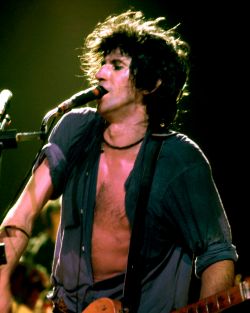
yes, once again, the incontainable fire sparked, the lights glaring, the crowd gone wild - hot and furious seth faces the fact. hot and incontainable he lights the hearts of too many teenage girls, lost forever in the stadium of delirium on the edge of the australian shelf, on the brink of the australian night. will they ever recover? will he never learn? when we will he grow weary of these little escapades he calls ultimate wisdom? what does he know about wisdom?! he forgets to see himself in his true light, he forgets what he truly is - the rock start of wisdom, and the grocer of despair.
пятница, декабря 29, 2006
sensual seth
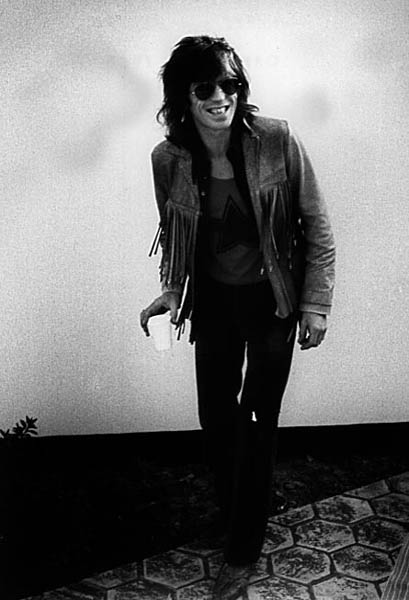
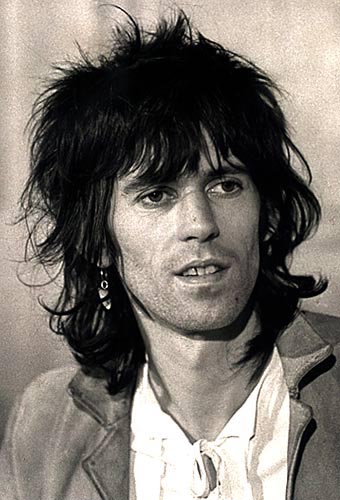
heres another one of the wild crew - mad max's right hand man, or should i say: nemesis. as is evident from these, our latest pictures of the culprit, many years wandering in the desert have left him very little respect for those around him: dont be fooled by words and caresses, they are only the by-products of many lonely nights listening to the wayward howl of the dingo. do not approach but with care, and then be certain to carry a large stick - it is the stick he fears above all else.
вторник, декабря 12, 2006
вторник, сентября 12, 2006
On My Friendship Circle
The reason I mentioned all of that sentimental rot about friendship is because I am about to explain about my friendship circle. It is a source of particularly acute embarrassment, hence I ask the considerate reader to be appropriately indulgent.
The compassionate reader will clearly understand that I needed a hefty injection of friendship. I believe I’ve heard various inane platitudes about friendship being the meaning of life and whatnot, and at that time I was prepared to grab ahold of any driftwood floating my way. I figured that seven or eight inane platitudes could be strapped together and perform admirable service as the raft, as it were (speaking in a fashion both metaphoric and, may I say, touchingly poetic), upon which I would float to salvation.
Well. The very first inane platitude that one should detach from the blasted raft of salvation and cast back into the sea with a spit and a curse is: ‘Any port in a storm’. Fucking, I say thee, fucking Percy. Let’s be clear: I was in a bad way. Being a sensitive soul, my rude disruption of a millipede menage-a-trois had induced within me a melancholia of the most profound breed. Then I thought of Percy.
I should, of course, spare a word to explain the phenomenon that is Percival, and being an obliging if not always engaging raconteur, am happy to offer several. Percy, as he seemed to be called, had many years of experience in the field of commercial failure. Perhaps the best that could be said of his credentials is that he had stumbled through one dismal enterprise after the next with admirable consistency. I had first encountered him several years ago on the docks, where he was attempting to make his fortune very quickly and with the least possible effort. The immediate acquisition of wealth was incorporated into all of Percy’s ventures, and it was this impatient hunger which always predicated his failure.
One could justifiably question why I would associate with such a parasite. The answer is simple: Percy was a sincerely likable fellow. His naivety brought forth a benevolent pity which was extremely gratifying, and his witless charm induced an easy affection. Most importantly, the absurd zest with which he embraced his immediate surroundings inspired others around him to forget their own questionable existence. Percy was interested neither in contemplation nor reflection; he wanted to interact with the Now, and was concerned only with his own impending future. It was Percy’s selfishness that inadvertently caused him to become my knight in shining armour: his predatory instinct required resources to exploit. As he had done on several previous occasions, Percy contacted me at a mysteriously propitious time, offered a brief and very sincere apology for not repaying the money I had invested with him two years ago, and inquired as to my interest in joining another venture. I accepted there and then. Far better, I figured, to invest a pittance on a poor wager than to fritter it away on the exigencies of day-to-day living.
Like all pathetically baseless optimists, Percy was overjoyed by my acceptance. There is, I suppose, nothing like a fellow traveller to make one feel better about one’s manifestly obvious insanity. What is it about fellow travellers? Take a person who passes his time jabbing himself with pins to ensure he still understands the concept of ‘pain’ and chuck him in a deep pit: he’ll be miserable and broken. Give him a pitmate who is, at the very least, prepared to refrain from condemning his behaviour, and the pinjabber will be mucking his pants in self-content. What is it about the human spirit which demands some vague reassurance that one need not solely rely upon oneself to get by? Are we so bereft of capability? How fearsome, how destructive the might of doubt! How powerful – and desolate – and impossible, to be sure – the character who can dismiss self-doubt, and do it on a whim, no less. Much as I wanted to blast through my own mortal coil, I succumbed instead to the demands of this fucking organic shell I inhabit: Percy was better than no one.
He had also managed to convince another old friend of his to embark upon his scheme. I did not inquire too deeply into her history: Percy had many acquaintances, and knew very little about any of them – but it was, I felt quite sure, safe to assume she was severely deranged. According to Percy’s laconic account, said friend had foolishly spurned her wealthy benefactors in order to become a self-made woman. Percy advised me that her attempts to put her ‘stupid, dreamland ideas’ into practice had ‘only landed her in trouble’. Of course, I did not question the nature of this trouble: as the well-bred reader will doubtless agree, such enquiries are unnecessarily nosey, and let us not disregard how easily a friendship can be lubricated through sheer ignorance. Galya was her name, and during our first meeting, I found her to be quite amiable, if a little forceful and easily frustrated. She and Percy spent most of the meeting arguing ferociously over insignificant details or engaging in petulant disputes that one appeared to initiate solely to antagonise the other. Nonetheless, it was evident that they appreciated one another’s enthusiasm, and revelled in taking issue with someone over anything. Shortly afterwards, I asked Percy if he did not think Galya’s failure to live up to her own expectations was affecting her mental stability. Percy assured me she was indeed far less capable than she proclaimed, and should be regarded with the greatest suspicion. I thanked him for his timely candour: by that stage I had handed over my meagre savings, and it was too late to withdraw.
The compassionate reader will clearly understand that I needed a hefty injection of friendship. I believe I’ve heard various inane platitudes about friendship being the meaning of life and whatnot, and at that time I was prepared to grab ahold of any driftwood floating my way. I figured that seven or eight inane platitudes could be strapped together and perform admirable service as the raft, as it were (speaking in a fashion both metaphoric and, may I say, touchingly poetic), upon which I would float to salvation.
Well. The very first inane platitude that one should detach from the blasted raft of salvation and cast back into the sea with a spit and a curse is: ‘Any port in a storm’. Fucking, I say thee, fucking Percy. Let’s be clear: I was in a bad way. Being a sensitive soul, my rude disruption of a millipede menage-a-trois had induced within me a melancholia of the most profound breed. Then I thought of Percy.
I should, of course, spare a word to explain the phenomenon that is Percival, and being an obliging if not always engaging raconteur, am happy to offer several. Percy, as he seemed to be called, had many years of experience in the field of commercial failure. Perhaps the best that could be said of his credentials is that he had stumbled through one dismal enterprise after the next with admirable consistency. I had first encountered him several years ago on the docks, where he was attempting to make his fortune very quickly and with the least possible effort. The immediate acquisition of wealth was incorporated into all of Percy’s ventures, and it was this impatient hunger which always predicated his failure.
One could justifiably question why I would associate with such a parasite. The answer is simple: Percy was a sincerely likable fellow. His naivety brought forth a benevolent pity which was extremely gratifying, and his witless charm induced an easy affection. Most importantly, the absurd zest with which he embraced his immediate surroundings inspired others around him to forget their own questionable existence. Percy was interested neither in contemplation nor reflection; he wanted to interact with the Now, and was concerned only with his own impending future. It was Percy’s selfishness that inadvertently caused him to become my knight in shining armour: his predatory instinct required resources to exploit. As he had done on several previous occasions, Percy contacted me at a mysteriously propitious time, offered a brief and very sincere apology for not repaying the money I had invested with him two years ago, and inquired as to my interest in joining another venture. I accepted there and then. Far better, I figured, to invest a pittance on a poor wager than to fritter it away on the exigencies of day-to-day living.
Like all pathetically baseless optimists, Percy was overjoyed by my acceptance. There is, I suppose, nothing like a fellow traveller to make one feel better about one’s manifestly obvious insanity. What is it about fellow travellers? Take a person who passes his time jabbing himself with pins to ensure he still understands the concept of ‘pain’ and chuck him in a deep pit: he’ll be miserable and broken. Give him a pitmate who is, at the very least, prepared to refrain from condemning his behaviour, and the pinjabber will be mucking his pants in self-content. What is it about the human spirit which demands some vague reassurance that one need not solely rely upon oneself to get by? Are we so bereft of capability? How fearsome, how destructive the might of doubt! How powerful – and desolate – and impossible, to be sure – the character who can dismiss self-doubt, and do it on a whim, no less. Much as I wanted to blast through my own mortal coil, I succumbed instead to the demands of this fucking organic shell I inhabit: Percy was better than no one.
He had also managed to convince another old friend of his to embark upon his scheme. I did not inquire too deeply into her history: Percy had many acquaintances, and knew very little about any of them – but it was, I felt quite sure, safe to assume she was severely deranged. According to Percy’s laconic account, said friend had foolishly spurned her wealthy benefactors in order to become a self-made woman. Percy advised me that her attempts to put her ‘stupid, dreamland ideas’ into practice had ‘only landed her in trouble’. Of course, I did not question the nature of this trouble: as the well-bred reader will doubtless agree, such enquiries are unnecessarily nosey, and let us not disregard how easily a friendship can be lubricated through sheer ignorance. Galya was her name, and during our first meeting, I found her to be quite amiable, if a little forceful and easily frustrated. She and Percy spent most of the meeting arguing ferociously over insignificant details or engaging in petulant disputes that one appeared to initiate solely to antagonise the other. Nonetheless, it was evident that they appreciated one another’s enthusiasm, and revelled in taking issue with someone over anything. Shortly afterwards, I asked Percy if he did not think Galya’s failure to live up to her own expectations was affecting her mental stability. Percy assured me she was indeed far less capable than she proclaimed, and should be regarded with the greatest suspicion. I thanked him for his timely candour: by that stage I had handed over my meagre savings, and it was too late to withdraw.
понедельник, сентября 04, 2006
another try
It’s so rare I get to show up a smart guy who’s my friend too, that I jumped at the opportunity from heaven when buddy said he didn’t get out and vote in the election last week.
‘So what’s all this about being so smart then?’ I said to his face.
‘Yeah, damn it,’ he said, ‘I was really aching to get out and get my word in, but geez if the last couple of days haven’t been hazardous enough.’
So I asked him to tell me the deal.
The whole affair hinged on a couple of complete unforeseeables that, added up, fell down into place like sheer stupid luck, unconnected, but by the power of mathematics, wearisome.
‘Happy New Year!’ he said, ‘this is my story.’
First he was sitting around one day, reading a book, probably, and out of the blue the phone rang.
‘Just a fluke of nature,’ he said, ‘and not foreseeable in the least. My mother’s only friend went down with a case of coming undone at the seams and they took her away to the hospital. Poor lady has a twelve year old daughter, and though my ma offered and asked to take care of the girl, the services came and took her away. But she also has a cat and nowhere to put it into, so I took it on, as mother has the fear of animals and viruses. So I got the cat, and you know, the thing is just adorable, but I must admit I know nothing of how to care for animals, the sphere of my knowledges being limited to politics, and I felt obliged to keep it entertained like any old guest. So after they brought it by, I was spending my time rolling around with it on the floor; I went to the store and bought a ball of yarn, and I’ve been rolling around throwing the ball of yarn at it, and basically we’ve been having a grand old time. Despite the wounds on my face and arms, we have bonded famously and I call him little cat face, and it’s great. Eventually I had to go to work and do my thing there though, and poor cat face, as any guest could be expected to, got bored. So when I got home I found he had eaten everything made of material, and scratched the walls up to boot, and I had a long night stitching up my business suits and making the place liveable again.’
‘That’s all interesting and good,’ I said in impatience, ‘but I don’t see how it kept you away from the polling booths.’
‘Well,’ he said, ‘seeing as your culture is one inclined to impatience and punch lines I can forgive you, but if you just let me go, I’ll lead you on to the end.’
‘Ok,’ I said, ‘I’m sorry.’
‘A couple of days later another thing happened that was just a complete fluke too, and not an everyday occurrence. While I was snoring in my bed for the night, dreaming of all the slurpees my modest wages bring me after the loan payments have gone through, I found myself awoken by the telephone with another urgent bad call from my mother. This time a robber had cracked in and broken the window by her backdoor, and made haste with her purse. She had no documents and didn’t know how she would recover her peace of mind, or convince other people she was who she said. I managed to calm her down enough to make out her words and promised to stop by and help her talk to the police. I did just that, and said “thank you” to the officer, and was about to leave when my mother asked me to give her the cat for company and to feel protected.
‘“The usual collocation is guard dog, mother,” I said, ‘but if it will help with the tears, I guess you can have him.”
‘So shattered as I was at losing my new companion who understood me so well, I took the cat over to my mother’s and said farewell.
‘I have to admit I was feeling a little down, but I still had all my destroyed furniture to look at and remember him by, and there’s no use getting down every day.
‘Then the coup de grace struck me right off. You know I’m really in love with the modern world, I’m not a student any more, and I see no point in protesting against the new technologies; I love spaceships and TVs and online banking, but I couldn’t get into my account. So I ran in to the bank and asked them what the problem was and they told me they had sealed my account on account of my suspicious activities.
‘“And what’s so suspicious about loving the modern world?!” I said.
‘“Well,” they said, “it’s the way you gave all your money to a stranger by email.”
“Mama Mia!” I cried, and when they managed to calm me a bit down, they promised to find who had taken it, maybe, and explained that it was common practice to shut people out of business when such suspicious transactions happen and take place.
‘“But if you had really been itching to close me down, why couldn’t you have done it before they took all the 944 dollars I’d managed to save by pinching pennies together and rubbing dimes? Or let me live my life in peace with the money stashed under my bed, instead of insisting with your buddies in the government that in exchange for my hours of backbreaking, the companies I sell my soul to have to deposit my worthless life directly into my account? Why can’t I just be paid in potatoes immediately at the end of the day? Or do I have to move to some corrupt third world country like Russia or Australia where people still rely on the barter system?”
‘But unfortunately there aren’t answers to everything, and though the sum may be laughable on big banking streets, it’s gonna take me 14 years to get that much saved again from working all day long at the library, and by night at the bakery.’
‘Well,’ I said, ‘as they say – super! But I’m damned if I can see the connections or how the election is to blame.’
‘Yeah, damn it, what connections are there in life? And nobody here is blaming anyone, except maybe the laws of probability. It’s nothing. It’s only something because last year the lady at the bank with the black hair - you know I love the dark hair - said a document concerning my student loan had been lost and she had promptly given my case over to the agency for deadbeat dads and other working class scum. And that’s fine, hold on, I’m not going on and on about it, though I might feel entitled to – they never even said, “Mister, hey buddy, we’re terribly sorry,” and I’m by nature inclined to the politeness of the British. No, that’s not the point, and I’m not getting my legs all bent out of shape by it. There’s no use in pointing fingers all day long. I just want to complain once and a while too, you know, like any other normal person who hasn’t yet found out that life wasn’t meant for pleasure. I think it’s all incredibly ironic that it happened on the very day we are to pick the ruling class – which is full of all the people who refuse to accept that death and disease exist to keep the population down at a normal size, and that hurricanes only exist to destroy all these stupid beachside condos we exchanged our natural habit for.’
‘Hold on,’ I said, ‘you’re starting to let fluency and beauty of speech get right in front of logic and sound argument. Death and disease is all very good, but what is our natural habit then, eh?’
‘Caves, buddy, caves. We sleep at night because it’s dangerous to wander out from the cave. We sleep around the fire because if the wolf tries to pull your baby away, you throw flaming brands at it. And now that we don’t live in caves and only rarely battle wolves we suffer from insomnia and stay up all night watching soft core porn, our eyes barely registering what we see, but our minds not missing a single frame. And so when we get old we need Viagra because our brain has a different idea of beauty, and it’s always at an angle we can’t reach anymore. The doctors can say what they want about inflamed prostate glands – we all know it’s an inflamed sense of false eroticism. In this sense the continental Europeans have always been superior to us. If it weren’t for the fact that their cities are thousands of years old, and the fact that the plague could suddenly pop up out of the ancient sewer systems, I would move there without even saying goodbye to my urologist. As it is we are trapped, and if it isn’t a lie about the reasons for sexual dysfunction, it’s civic duty. There are so many traps out there you can’t take a step without becoming a victim of your own stride.’
‘So what are you going to do now?’ I asked, unable to resist the feeling of being a little lost at sea.
‘What any normal person would do.’
‘And what’s that?’
‘I don’t know. Forget about the whole thing for a while. Get drunk. Work lots of overtime. Who cares?’
‘That’s ridiculous and I feel like I’ve been robbed of my reason and sanity. How can you justify talking about nothing but yourself and lying? I feel strange and violated.’
‘Listen buddy,’ he said, ‘just get a girlfriend and you’ll come to adore the feeling.’
‘But you’re not my girlfriend and what you’re saying has left the bounds of reason. You can’t falsely advertise what you are going to say and then not say it. I’m sure I could take some sort of legal action against you and your family. Not to mention the difficulty you would have justifying your reasoning in front of a judge if I told him the rotten and perverted things you said about girlfriends.’
‘Our culture is indeed one that crossed and left behind the bounds of understanding many years ago in the past, but I would hardly say I have left you any reason to be dissatisfied with my answers. On the contrary, I ought to be lauded and told wonderful things, and I wish you would stop reminding me about girls.’
By this point both of us were quite beside ourselves and livid by the direction the conversation had taken, which was quite understandable, to be perfectly honest. I should have known better than to try and show buddy up. Nothing begun with its motives in pride can come to anything good, and what were my motives if not my pride, based in my desire to show myself to be superior and better than buddy.
So I got up and walked out, and left buddy alone. And he did the same.
‘So what’s all this about being so smart then?’ I said to his face.
‘Yeah, damn it,’ he said, ‘I was really aching to get out and get my word in, but geez if the last couple of days haven’t been hazardous enough.’
So I asked him to tell me the deal.
The whole affair hinged on a couple of complete unforeseeables that, added up, fell down into place like sheer stupid luck, unconnected, but by the power of mathematics, wearisome.
‘Happy New Year!’ he said, ‘this is my story.’
First he was sitting around one day, reading a book, probably, and out of the blue the phone rang.
‘Just a fluke of nature,’ he said, ‘and not foreseeable in the least. My mother’s only friend went down with a case of coming undone at the seams and they took her away to the hospital. Poor lady has a twelve year old daughter, and though my ma offered and asked to take care of the girl, the services came and took her away. But she also has a cat and nowhere to put it into, so I took it on, as mother has the fear of animals and viruses. So I got the cat, and you know, the thing is just adorable, but I must admit I know nothing of how to care for animals, the sphere of my knowledges being limited to politics, and I felt obliged to keep it entertained like any old guest. So after they brought it by, I was spending my time rolling around with it on the floor; I went to the store and bought a ball of yarn, and I’ve been rolling around throwing the ball of yarn at it, and basically we’ve been having a grand old time. Despite the wounds on my face and arms, we have bonded famously and I call him little cat face, and it’s great. Eventually I had to go to work and do my thing there though, and poor cat face, as any guest could be expected to, got bored. So when I got home I found he had eaten everything made of material, and scratched the walls up to boot, and I had a long night stitching up my business suits and making the place liveable again.’
‘That’s all interesting and good,’ I said in impatience, ‘but I don’t see how it kept you away from the polling booths.’
‘Well,’ he said, ‘seeing as your culture is one inclined to impatience and punch lines I can forgive you, but if you just let me go, I’ll lead you on to the end.’
‘Ok,’ I said, ‘I’m sorry.’
‘A couple of days later another thing happened that was just a complete fluke too, and not an everyday occurrence. While I was snoring in my bed for the night, dreaming of all the slurpees my modest wages bring me after the loan payments have gone through, I found myself awoken by the telephone with another urgent bad call from my mother. This time a robber had cracked in and broken the window by her backdoor, and made haste with her purse. She had no documents and didn’t know how she would recover her peace of mind, or convince other people she was who she said. I managed to calm her down enough to make out her words and promised to stop by and help her talk to the police. I did just that, and said “thank you” to the officer, and was about to leave when my mother asked me to give her the cat for company and to feel protected.
‘“The usual collocation is guard dog, mother,” I said, ‘but if it will help with the tears, I guess you can have him.”
‘So shattered as I was at losing my new companion who understood me so well, I took the cat over to my mother’s and said farewell.
‘I have to admit I was feeling a little down, but I still had all my destroyed furniture to look at and remember him by, and there’s no use getting down every day.
‘Then the coup de grace struck me right off. You know I’m really in love with the modern world, I’m not a student any more, and I see no point in protesting against the new technologies; I love spaceships and TVs and online banking, but I couldn’t get into my account. So I ran in to the bank and asked them what the problem was and they told me they had sealed my account on account of my suspicious activities.
‘“And what’s so suspicious about loving the modern world?!” I said.
‘“Well,” they said, “it’s the way you gave all your money to a stranger by email.”
“Mama Mia!” I cried, and when they managed to calm me a bit down, they promised to find who had taken it, maybe, and explained that it was common practice to shut people out of business when such suspicious transactions happen and take place.
‘“But if you had really been itching to close me down, why couldn’t you have done it before they took all the 944 dollars I’d managed to save by pinching pennies together and rubbing dimes? Or let me live my life in peace with the money stashed under my bed, instead of insisting with your buddies in the government that in exchange for my hours of backbreaking, the companies I sell my soul to have to deposit my worthless life directly into my account? Why can’t I just be paid in potatoes immediately at the end of the day? Or do I have to move to some corrupt third world country like Russia or Australia where people still rely on the barter system?”
‘But unfortunately there aren’t answers to everything, and though the sum may be laughable on big banking streets, it’s gonna take me 14 years to get that much saved again from working all day long at the library, and by night at the bakery.’
‘Well,’ I said, ‘as they say – super! But I’m damned if I can see the connections or how the election is to blame.’
‘Yeah, damn it, what connections are there in life? And nobody here is blaming anyone, except maybe the laws of probability. It’s nothing. It’s only something because last year the lady at the bank with the black hair - you know I love the dark hair - said a document concerning my student loan had been lost and she had promptly given my case over to the agency for deadbeat dads and other working class scum. And that’s fine, hold on, I’m not going on and on about it, though I might feel entitled to – they never even said, “Mister, hey buddy, we’re terribly sorry,” and I’m by nature inclined to the politeness of the British. No, that’s not the point, and I’m not getting my legs all bent out of shape by it. There’s no use in pointing fingers all day long. I just want to complain once and a while too, you know, like any other normal person who hasn’t yet found out that life wasn’t meant for pleasure. I think it’s all incredibly ironic that it happened on the very day we are to pick the ruling class – which is full of all the people who refuse to accept that death and disease exist to keep the population down at a normal size, and that hurricanes only exist to destroy all these stupid beachside condos we exchanged our natural habit for.’
‘Hold on,’ I said, ‘you’re starting to let fluency and beauty of speech get right in front of logic and sound argument. Death and disease is all very good, but what is our natural habit then, eh?’
‘Caves, buddy, caves. We sleep at night because it’s dangerous to wander out from the cave. We sleep around the fire because if the wolf tries to pull your baby away, you throw flaming brands at it. And now that we don’t live in caves and only rarely battle wolves we suffer from insomnia and stay up all night watching soft core porn, our eyes barely registering what we see, but our minds not missing a single frame. And so when we get old we need Viagra because our brain has a different idea of beauty, and it’s always at an angle we can’t reach anymore. The doctors can say what they want about inflamed prostate glands – we all know it’s an inflamed sense of false eroticism. In this sense the continental Europeans have always been superior to us. If it weren’t for the fact that their cities are thousands of years old, and the fact that the plague could suddenly pop up out of the ancient sewer systems, I would move there without even saying goodbye to my urologist. As it is we are trapped, and if it isn’t a lie about the reasons for sexual dysfunction, it’s civic duty. There are so many traps out there you can’t take a step without becoming a victim of your own stride.’
‘So what are you going to do now?’ I asked, unable to resist the feeling of being a little lost at sea.
‘What any normal person would do.’
‘And what’s that?’
‘I don’t know. Forget about the whole thing for a while. Get drunk. Work lots of overtime. Who cares?’
‘That’s ridiculous and I feel like I’ve been robbed of my reason and sanity. How can you justify talking about nothing but yourself and lying? I feel strange and violated.’
‘Listen buddy,’ he said, ‘just get a girlfriend and you’ll come to adore the feeling.’
‘But you’re not my girlfriend and what you’re saying has left the bounds of reason. You can’t falsely advertise what you are going to say and then not say it. I’m sure I could take some sort of legal action against you and your family. Not to mention the difficulty you would have justifying your reasoning in front of a judge if I told him the rotten and perverted things you said about girlfriends.’
‘Our culture is indeed one that crossed and left behind the bounds of understanding many years ago in the past, but I would hardly say I have left you any reason to be dissatisfied with my answers. On the contrary, I ought to be lauded and told wonderful things, and I wish you would stop reminding me about girls.’
By this point both of us were quite beside ourselves and livid by the direction the conversation had taken, which was quite understandable, to be perfectly honest. I should have known better than to try and show buddy up. Nothing begun with its motives in pride can come to anything good, and what were my motives if not my pride, based in my desire to show myself to be superior and better than buddy.
So I got up and walked out, and left buddy alone. And he did the same.
вторник, августа 29, 2006
Four hundred and fifty five words on friendship
It is necessary, at this moment, to pause in our reflections on wisdom that I might drop a charmed word or four hundred and fifty five on the topic of friendship.
When in need, there are few greater resources than a gaggle of willing friends. It’s ever so handy to have at one’s disposal a select group of moderately incompetent well-wishers to ease the rocky roads we are all forced to tread from time to needlessly trying time. I suppose that the satisfaction derived from being a Daemon Lord lies not only in the pursuit of carnality, but also in the knowledge that one has a bevy of hyena-men pootling about, jaws aslaver at the prospect of giving you a damned good hand with the dishes.
I recently discovered that I had no friends. Being such manifestly wonderful creations, one could be forgiven for thinking that making friends would be to humans what nest-building is to birds: a task you’d rather some other bastard would undertake for you, so you can simply receive the finished product with little babies waiting to hatch and an irresistable urge to chunder in each others’ mouths, but by dammit something that can well be done with one’s own hands – or wings, as the case may be – and with considerable aplomb, should the need arise. Well, I certainly hope I need not mention that such is not the case. Readers who, having cast an appraising eye over the preceding sentiments, casually evoked somesuch thought: ‘What is the man whinging about? Making friends is like wanking: fast, easy, and satisfying,’ may avert thine eyes now. We are not all Gods walking upon this Earth, able to win true and lifelong friends willy-nilly by sheer force of our numinous nimbi, rampant libidos, and lightning crackling from fingers. It’s damned hard work – especially those of us who, obliged to fulfill certain domestic responsibilities (Earl Grey does not make itself, after all), are unable to venture forth with a cheery smile plastered across the old mug, hugging this prole and that in an orgy of soulmatery. Friends are supposed to be the kind of people who wriggle their disgusting way out of the woodwork at just the right time. Well, do you think any came wriggling my way? It was quite, I can assure you, the opposite: I planted myself on the ground and waited for friends to flock around, frothing with enthusiasm, yet found myself watching three millipedes trundle away in that enragingly pointless fashion of theirs from under the leaves I had disturbed. Millipedes, for God’s sake: even a smelly little blighter with thirty-thousand excess legs and a tendency to coil up like a poo had more friends than I.
When in need, there are few greater resources than a gaggle of willing friends. It’s ever so handy to have at one’s disposal a select group of moderately incompetent well-wishers to ease the rocky roads we are all forced to tread from time to needlessly trying time. I suppose that the satisfaction derived from being a Daemon Lord lies not only in the pursuit of carnality, but also in the knowledge that one has a bevy of hyena-men pootling about, jaws aslaver at the prospect of giving you a damned good hand with the dishes.
I recently discovered that I had no friends. Being such manifestly wonderful creations, one could be forgiven for thinking that making friends would be to humans what nest-building is to birds: a task you’d rather some other bastard would undertake for you, so you can simply receive the finished product with little babies waiting to hatch and an irresistable urge to chunder in each others’ mouths, but by dammit something that can well be done with one’s own hands – or wings, as the case may be – and with considerable aplomb, should the need arise. Well, I certainly hope I need not mention that such is not the case. Readers who, having cast an appraising eye over the preceding sentiments, casually evoked somesuch thought: ‘What is the man whinging about? Making friends is like wanking: fast, easy, and satisfying,’ may avert thine eyes now. We are not all Gods walking upon this Earth, able to win true and lifelong friends willy-nilly by sheer force of our numinous nimbi, rampant libidos, and lightning crackling from fingers. It’s damned hard work – especially those of us who, obliged to fulfill certain domestic responsibilities (Earl Grey does not make itself, after all), are unable to venture forth with a cheery smile plastered across the old mug, hugging this prole and that in an orgy of soulmatery. Friends are supposed to be the kind of people who wriggle their disgusting way out of the woodwork at just the right time. Well, do you think any came wriggling my way? It was quite, I can assure you, the opposite: I planted myself on the ground and waited for friends to flock around, frothing with enthusiasm, yet found myself watching three millipedes trundle away in that enragingly pointless fashion of theirs from under the leaves I had disturbed. Millipedes, for God’s sake: even a smelly little blighter with thirty-thousand excess legs and a tendency to coil up like a poo had more friends than I.
суббота, августа 26, 2006
THE SUFFOLKCOUNTYPARKPOLICETEAM
has given all his men into the search of the identity of this blog
they all died
do you want to go any further
and send some more into the oblivion ?
SAY YES !
WE HAVE PLENTY

AND SIGN UP FOR
ANOTHER WONDERFUL STORIES OF OUR OWN
they all died
do you want to go any further
and send some more into the oblivion ?
SAY YES !
WE HAVE PLENTY

AND SIGN UP FOR
ANOTHER WONDERFUL STORIES OF OUR OWN
четверг, февраля 02, 2006
Les chateaux en Espagne a la Babel Fish (or 'Why I Think Max is Mad')
Currently, in hibernation controlee, acroche after a fashion has the illusion which it still occurs quelquechose here or finally my two eyes to the eyelids terribly weighed down by the incontrolable heat which emane of these large blocks of cast iron, by intermitence, with some giclettes of white frost, corrosive without repis, these large hands degantees, open on tiny plains, those of my territory, my niche. Then for you, I look right in front of, such which is allowed to me to do it, directs, like a horse in his box, simple expressions vehiculees by the trouble of a field of vision retreci and I retranscribe, my vision, single who echappe more like front, worms of the unknown prospects, those which I liked to contemplate when one left me time of them, at the edge of a large road, or of a radiant distance, when I saw myself advancing in the unknown, carrying beautiful a costume in flax, has the shelter of the luminous rays of a star which never disappeared.
I lost my gloves in a viree of more than 72 hours, between stores of sounds and small echoppes has beer, while passing by the stirring up cellars of Red Way, or the international DJ will reconsider gloser musicalement the importance of Kick and of Snare in time reel, while supervising, well evidemment, the some giscettes has the important cosmetic beauty, a farandole of nails chatoyants will come same to type on the plane surface of my understanding. Tic tic tic, to mark of another rate/rhythm surperpose, the minutes which are egrenent in this sand glass or the sand is white, without another color, nor taste, like vodka which me brule bone, which me empeche to capture sleep and of me of to make friend, that I will take between my two large arms as you which sleep on another proeminence, certainly, well emmitoufles, with the heat, ouais, I think that you sleep like me, as I do not think, as I am unable to remain eveille, it is the night and it will never be eteindra either.
I lost my gloves in a viree of more than 72 hours, between stores of sounds and small echoppes has beer, while passing by the stirring up cellars of Red Way, or the international DJ will reconsider gloser musicalement the importance of Kick and of Snare in time reel, while supervising, well evidemment, the some giscettes has the important cosmetic beauty, a farandole of nails chatoyants will come same to type on the plane surface of my understanding. Tic tic tic, to mark of another rate/rhythm surperpose, the minutes which are egrenent in this sand glass or the sand is white, without another color, nor taste, like vodka which me brule bone, which me empeche to capture sleep and of me of to make friend, that I will take between my two large arms as you which sleep on another proeminence, certainly, well emmitoufles, with the heat, ouais, I think that you sleep like me, as I do not think, as I am unable to remain eveille, it is the night and it will never be eteindra either.
вторник, декабря 20, 2005
driving is for buttheads
i cant drive! i dont even want to see driving! when i see people, in their little car machines, i turn my head around and look at the ground, and not at the stupid asshole car machines! i hate them! they are for little chicken brains. they are for the marginalized and the abused who like to feel power instead of life. i dont like power. i like life. i like the rain. i like the warmth of friendship. i like being with you, and i like being alone. but not power. oh no, not me.
среда, ноября 09, 2005
except for the aussie
so alright, how about this then: two hunchbacks are walking through the park and they run into...no forget about that, thats not whats most important. how about this then: two men with heavy limps are slouching their way through the astroplane - no, again, not the point. so lets take a little look at this, maybe this will do, maybe this will be ok: one hunchback, one lame heavy limper, and two women with lip cancer are rowing a boat through the centre of town - but what kind of rowing in the middle of town, you ask?! rowing has more to do with water and less to do with hunchbacks and midgets and diseased women, you say?! but i didnt say anything about midgets, and i certainly didnt say the women were diseased! i have to ask - are you even paying attention to what im writing down here?! are you even caring and interested?! the point is just this - dont we all feel a little bit like the hunchback and cancerous lipped and limping once a while, dont we all feel strong and brave in the face of it all?! (except of course for the aussie, you say, in his perfect isolation and anit-sociosociety! he has no need for bravery, because he refuses to admit that he too has a bit of the hunchback in him, that he too has a limp like the rest of us!)
четверг, октября 06, 2005
Chet and Christmas
Someone once said to me: ‘That Chet – he’s a moody fucker’. Well, and I disagreed then and thought no more of it. But I remembered the comment just now, cos I was thinking about Christmas this year and I suppose I hate Christmas. All the family gathered around in some bullshit display of false congeniality, jittering and jumping, desperate for harmony. I think it’s pathetic. I said so, too, to someone once, and they told me I was a moody fucker. Maybe it was the same person, come to think of it.
I went to the family Christmas two years ago, cos my brother was going. He’s not around much, but he’s alright, and I thought we could catch up. Once I arrived though, all my good intentions just drained away. One moment I was thinking about nothing very important, and the next – well, I just had to leave. My brother never even showed up anyway.
Yeah, me and Chet – we go way back.
I went to the family Christmas two years ago, cos my brother was going. He’s not around much, but he’s alright, and I thought we could catch up. Once I arrived though, all my good intentions just drained away. One moment I was thinking about nothing very important, and the next – well, I just had to leave. My brother never even showed up anyway.
Yeah, me and Chet – we go way back.
понедельник, октября 03, 2005
A perfect fish
Once upon a time, there were two polar bears. They were good friends. They lived together, alone. They searched for food together and shared it. But food was becoming more and more difficult to find. One day, out the blue, they found a fish. But not just any fish. A perfect fish. The first bear couldn’t wait to eat it. The second bear thought about it and suggested that it would have been wiser for them to find another great fish to mate it with so that they would have more then enough food for the future. They would have to be patient but the idea was very good. The first bear agreed.
After much searching, they found it. Another perfect fish. While waiting for them to make many baby fish, they kept feeding off smaller fish they found, knowing that soon they wouldn’t have to worry about food any longer.
One day, the second bear had to leave his friend for a while. He had to go see his sick mother. He had to take care of her. He was sad to leave his friend but had no choice. He was away for a few weeks.
When his mother had recovered, he was very happy to be able to go back to his friend. He was impatient to see him and to enjoy with him a perfect meal. The result of their patience and their efforts. But when he arrived, only one fish was left. The first bear had eaten everything that they had worked for together. And he gave no explanation. He simply said “I’m sorry”, shrugged, and went to sleep.
The next morning, when the first bear woke up, his good friend was gone. The last fish had been eaten. Its carcass was lying next to him.
After much searching, they found it. Another perfect fish. While waiting for them to make many baby fish, they kept feeding off smaller fish they found, knowing that soon they wouldn’t have to worry about food any longer.
One day, the second bear had to leave his friend for a while. He had to go see his sick mother. He had to take care of her. He was sad to leave his friend but had no choice. He was away for a few weeks.
When his mother had recovered, he was very happy to be able to go back to his friend. He was impatient to see him and to enjoy with him a perfect meal. The result of their patience and their efforts. But when he arrived, only one fish was left. The first bear had eaten everything that they had worked for together. And he gave no explanation. He simply said “I’m sorry”, shrugged, and went to sleep.
The next morning, when the first bear woke up, his good friend was gone. The last fish had been eaten. Its carcass was lying next to him.
вторник, сентября 27, 2005
buddy
ive got a friend and he worries me. because hes always so worried about being crazy, and going crazy, and giving off impressions that make people say, 'hey, he's pretty crazy, right?'
and i say to him: craziness is all fine and good, its ok, but you know man, i think youre very close to having something, i mean, to really being bang on - until you start talking about how crazy you are, i mean, you were so close.' and i really think that, i think he is close.
well, yesterday we were hanging out around novoslobodskaya, and we were making funny jokes, and saying things, and hanging out, and then all of a sudden there he goes, bang - man, im crazy!
and all i could say was - man, you were funny, you were witty and bang on, and then you have to screw the whole fucking thing up! crazy my ass! you are fucking crazy - i said - asshole.
and then, geez, he did get a bit weird, i mean, i dont know; some dude walked up and buddy turned around and looked at him straight in the face and screamed and then - fell down on the pavement and started frothing at the fucking mouth. then he got up and looked me in the face and said - nothing. he didnt say anything. but he freaked me out a bit. i dont know.
and i say to him: craziness is all fine and good, its ok, but you know man, i think youre very close to having something, i mean, to really being bang on - until you start talking about how crazy you are, i mean, you were so close.' and i really think that, i think he is close.
well, yesterday we were hanging out around novoslobodskaya, and we were making funny jokes, and saying things, and hanging out, and then all of a sudden there he goes, bang - man, im crazy!
and all i could say was - man, you were funny, you were witty and bang on, and then you have to screw the whole fucking thing up! crazy my ass! you are fucking crazy - i said - asshole.
and then, geez, he did get a bit weird, i mean, i dont know; some dude walked up and buddy turned around and looked at him straight in the face and screamed and then - fell down on the pavement and started frothing at the fucking mouth. then he got up and looked me in the face and said - nothing. he didnt say anything. but he freaked me out a bit. i dont know.
четверг, сентября 22, 2005
mon ami le max
mon ami le max
parfois est comme un ours sans une mere
est comme une renard sans la lettre r
parfois je pense qu'il est un grand arbre
parfois mais pas chaque jour
mais pas chaque
max
est
mon
ami
mon ami max
parfois est comme un ours sans une mere
est comme une renard sans la lettre r
parfois je pense qu'il est un grand arbre
parfois mais pas chaque jour
mais pas chaque
max
est
mon
ami
mon ami max
Подписаться на:
Сообщения (Atom)


 Сообщения

