Показаны сообщения с ярлыком philosophie. Показать все сообщения
Показаны сообщения с ярлыком philosophie. Показать все сообщения
вторник, августа 24, 2010

вторник, января 13, 2009
What then is the virtue of a horse? is it to have a bridle studded with gold and girths to match, and a band of silken threads to fasten the housing, and clothes wrought in divers colours and gold tissue, and head gear studded with jewels, and locks of hair plaited with gold cord? or is it to be swift and strong in its legs, and even in its paces, and to have hoofs suitable to a well bred horse, and courage fitted for long journies and warfare, and to be able to behave with calmness in the battle field, and if a rout takes place to save its rider? Is it not manifest that these are the things which constitute the virtue of the horse, not the others? Again, what should you say was the virtue of asses and mules? is it not the power of carrying burdens with contentment, and accomplishing journies with ease, and having hoofs like rock? Shall we say that their outside trappings contribute anything to their own proper virtue? By no means. And what kind of vine shall we admire? one which abounds in leaves and branches, or one which is laden with fruit? or what kind of virtue do we predicate of an olive? is it to have large boughs, and great luxuriance of leaves, or to exhibit an abundance of its proper fruit dispersed over all parts of the tree? Well, let us act in the same way in the case of human beings also: let us determine what is the virtue of man, and let us regard that alone as an injury, which is destructive to it.
среда, декабря 12, 2007
From the Confessions of st. Augustine
3.1.1
To Carthage I came, where there sang all around me in my ears
a cauldron of unholy loves. I loved not yet, yet I loved to love,
and out of a deep-seated want, I hated myself for wanting not. I sought
what I might love, in love with loving, and safety I hated, and a
way without snares. For within me was a famine of that inward food,
Thyself, my God; yet, through that famine I was not hungered; but
was without all longing for incorruptible sustenance, not because
filled therewith, but the more empty, the more I loathed it. For this
cause my soul was sickly and full of sores, it miserably cast itself
forth, desiring to be scraped by the touch of objects of sense. Yet
if these had not a soul, they would not be objects of love. To love
then, and to be beloved, was sweet to me; but more, when I obtained
to enjoy the person I loved, I defiled, therefore, the spring of friendship
with the filth of concupiscence, and I beclouded its brightness with
the hell of lustfulness; and thus foul and unseemly, I would fain,
through exceeding vanity, be fine and courtly. I fell headlong then
into the love wherein I longed to be ensnared. My God, my Mercy, with
how much gall didst Thou out of Thy great goodness besprinkle for
me that sweetness? For I was both beloved, and secretly arrived at
the bond of enjoying; and was with joy fettered with sorrow-bringing
bonds, that I might be scourged with the iron burning rods of jealousy,
and suspicions, and fears, and angers, and quarrels.
3.2.2
Stage-plays also carried me away, full of images of my miseries,
and of fuel to my fire. Why is it, that man desires to be made sad,
beholding doleful and tragical things, which yet himself would no
means suffer? yet he desires as a spectator to feel sorrow at them,
this very sorrow is his pleasure. What is this but a miserable madness?
for a man is the more affected with these actions, the less free he
is from such affections. Howsoever, when he suffers in his own person,
it uses to be styled misery: when he compassionates others, then it
is mercy. But what sort of compassion is this for feigned and scenical
passions? for the auditor is not called on to relieve, but only to
grieve: and he applauds the actor of these fictions the more, the
more he grieves. And if the calamities of those persons (whether of
old times, or mere fiction) be so acted, that the spectator is not
moved to tears, he goes away disgusted and criticising; but if he
be moved to passion, he stays intent, and weeps for joy.
3.2.3
Are griefs then too loved? Verily all desire joy. Or whereas
no man likes to be miserable, is he yet pleased to be merciful? which
because it cannot be without passion, for this reason alone are passions
loved? This also springs from that vein of friendship. But whither
goes that vein? whither flows it? wherefore runs it into that torrent
of pitch bubbling forth those monstrous tides of foul lustfulness,
into which it is wilfully changed and transformed, being of its own
will precipitated and corrupted from its heavenly clearness? Shall
compassion then be put away? by no means. Be griefs then sometimes
loved. But beware of uncleanness, O my soul, under the guardianship
of my God, the God of our fathers, who is to be praised and exalted
above all for ever, beware of uncleanness. For I have not now ceased
to pity; but then in the theatres I rejoiced with lovers when they
wickedly enjoyed one another, although this was imaginary only in
the play. And when they lost one another, as if very compassionate,
I sorrowed with them, yet had my delight in both. But now I much more
pity him that rejoiceth in his wickedness, than him who is thought
to suffer hardship, by missing some pernicious pleasure, and the loss
of some miserable felicity. This certainly is the truer mercy, but
in it grief delights not. For though he that grieves for the miserable,
be commended for his office of charity; yet had he, who is genuinely
compassionate, rather there were nothing for him to grieve for. For
if good will be ill willed (which can never be), then may he, who
truly and sincerely commiserates, wish there might be some miserable,
that he might commiserate. Some sorrow may then be allowed, none loved.
For thus dost Thou, O Lord God, who lovest souls far more purely than
we, and hast more incorruptibly pity on them, yet are wounded with
no sorrowfulness. And who is sufficient for these things?
3.2.4
But I, miserable, then loved to grieve, and sought out what to
grieve at, when in another's and that feigned and personated misery,
that acting best pleased me, and attracted me the most vehemently,
which drew tears from me. What marvel that an unhappy sheep, straying
from Thy flock, and impatient of Thy keeping, I became infected with
a foul disease? And hence the love of griefs; not such as should sink
deep into me; for I loved not to suffer, what I loved to look on;
but such as upon hearing their fictions should lightly scratch the
surface; upon which, as on envenomed nails, followed inflamed swelling,
impostumes, and a putrefied sore. My life being such, was it life,
O my God?
3.3.5
And Thy faithful mercy hovered over me afar. Upon how grievous
iniquities consumed I myself, pursuing a sacrilegious curiosity, that
having forsaken Thee, it might bring me to the treacherous abyss,
and the beguiling service of devils, to whom I sacrificed my evil
actions, and in all these things Thou didst scourge me! I dared even,
while Thy solemnities were celebrated within the walls of Thy Church,
to desire, and to compass a business deserving death for its fruits,
for which Thou scourgedst me with grievous punishments, though nothing
to my fault, O Thou my exceeding mercy, my God, my refuge from those
terrible destroyers, among whom I wandered with a stiff neck, withdrawing
further from Thee, loving mine own ways, and not Thine; loving a vagrant
liberty.
3.3.6
Those studies also, which were accounted commendable, had a view
to excelling in the courts of litigation; the more bepraised, the
craftier. Such is men's blindness, glorying even in their blindness.
And now I was chief in the rhetoric school, whereat I joyed proudly,
and I swelled with arrogancy, though (Lord, Thou knowest) far quieter
and altogether removed from the subvertings of those "Subverters"
(for this ill-omened and devilish name was the very badge of gallantry)
among whom I lived, with a shameless shame that I was not even as
they. With them I lived, and was sometimes delighted with their friendship,
whose doings I ever did abhor -i.e., their "subvertings," wherewith
they wantonly persecuted the modesty of strangers, which they disturbed
by a gratuitous jeering, feeding thereon their malicious birth. Nothing
can be liker the very actions of devils than these. What then could
they be more truly called than "Subverters"? themselves subverted
and altogether perverted first, the deceiving spirits secretly deriding
and seducing them, wherein themselves delight to jeer at and deceive
others.
3.4.7
Among such as these, in that unsettled age of mine, learned I
books of eloquence, wherein I desired to be eminent, out of a damnable
and vainglorious end, a joy in human vanity. In the ordinary course
of study, I fell upon a certain book of Cicero, whose speech almost
all admire, not so his heart. This book of his contains an exhortation
to philosophy, and is called "Hortensius." But this book altered my
affections, and turned my prayers to Thyself O Lord; and made me have
other purposes and desires. Every vain hope at once became worthless
to me; and I longed with an incredibly burning desire for an immortality
of wisdom, and began now to arise, that I might return to Thee. For
not to sharpen my tongue (which thing I seemed to be purchasing with
my mother's allowances, in that my nineteenth year, my father being
dead two years before), not to sharpen my tongue did I employ that
book; nor did it infuse into me its style, but its matter.
To Carthage I came, where there sang all around me in my ears
a cauldron of unholy loves. I loved not yet, yet I loved to love,
and out of a deep-seated want, I hated myself for wanting not. I sought
what I might love, in love with loving, and safety I hated, and a
way without snares. For within me was a famine of that inward food,
Thyself, my God; yet, through that famine I was not hungered; but
was without all longing for incorruptible sustenance, not because
filled therewith, but the more empty, the more I loathed it. For this
cause my soul was sickly and full of sores, it miserably cast itself
forth, desiring to be scraped by the touch of objects of sense. Yet
if these had not a soul, they would not be objects of love. To love
then, and to be beloved, was sweet to me; but more, when I obtained
to enjoy the person I loved, I defiled, therefore, the spring of friendship
with the filth of concupiscence, and I beclouded its brightness with
the hell of lustfulness; and thus foul and unseemly, I would fain,
through exceeding vanity, be fine and courtly. I fell headlong then
into the love wherein I longed to be ensnared. My God, my Mercy, with
how much gall didst Thou out of Thy great goodness besprinkle for
me that sweetness? For I was both beloved, and secretly arrived at
the bond of enjoying; and was with joy fettered with sorrow-bringing
bonds, that I might be scourged with the iron burning rods of jealousy,
and suspicions, and fears, and angers, and quarrels.
3.2.2
Stage-plays also carried me away, full of images of my miseries,
and of fuel to my fire. Why is it, that man desires to be made sad,
beholding doleful and tragical things, which yet himself would no
means suffer? yet he desires as a spectator to feel sorrow at them,
this very sorrow is his pleasure. What is this but a miserable madness?
for a man is the more affected with these actions, the less free he
is from such affections. Howsoever, when he suffers in his own person,
it uses to be styled misery: when he compassionates others, then it
is mercy. But what sort of compassion is this for feigned and scenical
passions? for the auditor is not called on to relieve, but only to
grieve: and he applauds the actor of these fictions the more, the
more he grieves. And if the calamities of those persons (whether of
old times, or mere fiction) be so acted, that the spectator is not
moved to tears, he goes away disgusted and criticising; but if he
be moved to passion, he stays intent, and weeps for joy.
3.2.3
Are griefs then too loved? Verily all desire joy. Or whereas
no man likes to be miserable, is he yet pleased to be merciful? which
because it cannot be without passion, for this reason alone are passions
loved? This also springs from that vein of friendship. But whither
goes that vein? whither flows it? wherefore runs it into that torrent
of pitch bubbling forth those monstrous tides of foul lustfulness,
into which it is wilfully changed and transformed, being of its own
will precipitated and corrupted from its heavenly clearness? Shall
compassion then be put away? by no means. Be griefs then sometimes
loved. But beware of uncleanness, O my soul, under the guardianship
of my God, the God of our fathers, who is to be praised and exalted
above all for ever, beware of uncleanness. For I have not now ceased
to pity; but then in the theatres I rejoiced with lovers when they
wickedly enjoyed one another, although this was imaginary only in
the play. And when they lost one another, as if very compassionate,
I sorrowed with them, yet had my delight in both. But now I much more
pity him that rejoiceth in his wickedness, than him who is thought
to suffer hardship, by missing some pernicious pleasure, and the loss
of some miserable felicity. This certainly is the truer mercy, but
in it grief delights not. For though he that grieves for the miserable,
be commended for his office of charity; yet had he, who is genuinely
compassionate, rather there were nothing for him to grieve for. For
if good will be ill willed (which can never be), then may he, who
truly and sincerely commiserates, wish there might be some miserable,
that he might commiserate. Some sorrow may then be allowed, none loved.
For thus dost Thou, O Lord God, who lovest souls far more purely than
we, and hast more incorruptibly pity on them, yet are wounded with
no sorrowfulness. And who is sufficient for these things?
3.2.4
But I, miserable, then loved to grieve, and sought out what to
grieve at, when in another's and that feigned and personated misery,
that acting best pleased me, and attracted me the most vehemently,
which drew tears from me. What marvel that an unhappy sheep, straying
from Thy flock, and impatient of Thy keeping, I became infected with
a foul disease? And hence the love of griefs; not such as should sink
deep into me; for I loved not to suffer, what I loved to look on;
but such as upon hearing their fictions should lightly scratch the
surface; upon which, as on envenomed nails, followed inflamed swelling,
impostumes, and a putrefied sore. My life being such, was it life,
O my God?
3.3.5
And Thy faithful mercy hovered over me afar. Upon how grievous
iniquities consumed I myself, pursuing a sacrilegious curiosity, that
having forsaken Thee, it might bring me to the treacherous abyss,
and the beguiling service of devils, to whom I sacrificed my evil
actions, and in all these things Thou didst scourge me! I dared even,
while Thy solemnities were celebrated within the walls of Thy Church,
to desire, and to compass a business deserving death for its fruits,
for which Thou scourgedst me with grievous punishments, though nothing
to my fault, O Thou my exceeding mercy, my God, my refuge from those
terrible destroyers, among whom I wandered with a stiff neck, withdrawing
further from Thee, loving mine own ways, and not Thine; loving a vagrant
liberty.
3.3.6
Those studies also, which were accounted commendable, had a view
to excelling in the courts of litigation; the more bepraised, the
craftier. Such is men's blindness, glorying even in their blindness.
And now I was chief in the rhetoric school, whereat I joyed proudly,
and I swelled with arrogancy, though (Lord, Thou knowest) far quieter
and altogether removed from the subvertings of those "Subverters"
(for this ill-omened and devilish name was the very badge of gallantry)
among whom I lived, with a shameless shame that I was not even as
they. With them I lived, and was sometimes delighted with their friendship,
whose doings I ever did abhor -i.e., their "subvertings," wherewith
they wantonly persecuted the modesty of strangers, which they disturbed
by a gratuitous jeering, feeding thereon their malicious birth. Nothing
can be liker the very actions of devils than these. What then could
they be more truly called than "Subverters"? themselves subverted
and altogether perverted first, the deceiving spirits secretly deriding
and seducing them, wherein themselves delight to jeer at and deceive
others.
3.4.7
Among such as these, in that unsettled age of mine, learned I
books of eloquence, wherein I desired to be eminent, out of a damnable
and vainglorious end, a joy in human vanity. In the ordinary course
of study, I fell upon a certain book of Cicero, whose speech almost
all admire, not so his heart. This book of his contains an exhortation
to philosophy, and is called "Hortensius." But this book altered my
affections, and turned my prayers to Thyself O Lord; and made me have
other purposes and desires. Every vain hope at once became worthless
to me; and I longed with an incredibly burning desire for an immortality
of wisdom, and began now to arise, that I might return to Thee. For
not to sharpen my tongue (which thing I seemed to be purchasing with
my mother's allowances, in that my nineteenth year, my father being
dead two years before), not to sharpen my tongue did I employ that
book; nor did it infuse into me its style, but its matter.
четверг, октября 11, 2007
The True History of Jesus of Nazareth
Jesus was born back in the olden days, when the Romans were still bootin about. He was a Jew and poor. The Romans were nasty to Jews and to poor people.
He said we should all be good to each other, and not be nasty. Lots of people didn't like it when he said this.
They nailed him to a cross and he died.
He was a good bloke.
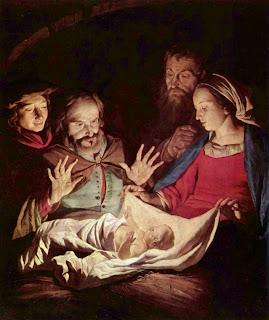 This is a picture of baby jesus by Gerard Von Honthorst. It is not an accurate depiction, for babies do
 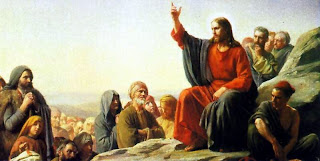 not glow. And here is another picture of Jesus giving a sermon by Carl Bloch. It is probably also not an accurate depiction, for people were poor and dirty in the olden days, and Jesus was a good bloke who did not hold forth like a wanker.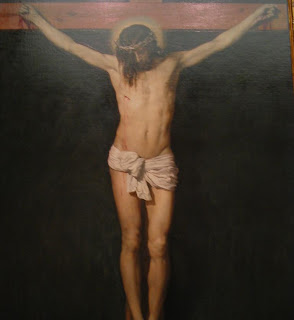
And here is another picture of Jesus on the cross by Cristo Velazquez. It might well be an accurate depiction of Jesus. Except the glowing head bit. People's heads don't glow.
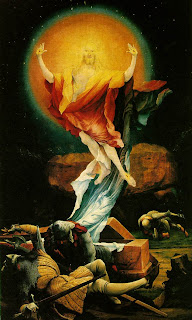
And here is another picture of Jesus resurrection from the dead by Matthias Grunewald. It is rather idealised. Jesus didn't fly around like a wizard with a big glowing balls behind him and a beatific expression on his face, and alas people don't rise from the dead.
He said we should all be good to each other, and not be nasty. Lots of people didn't like it when he said this.
They nailed him to a cross and he died.
He was a good bloke.
 This is a picture of baby jesus by Gerard Von Honthorst. It is not an accurate depiction, for babies do
  not glow. And here is another picture of Jesus giving a sermon by Carl Bloch. It is probably also not an accurate depiction, for people were poor and dirty in the olden days, and Jesus was a good bloke who did not hold forth like a wanker.
And here is another picture of Jesus on the cross by Cristo Velazquez. It might well be an accurate depiction of Jesus. Except the glowing head bit. People's heads don't glow.

And here is another picture of Jesus resurrection from the dead by Matthias Grunewald. It is rather idealised. Jesus didn't fly around like a wizard with a big glowing balls behind him and a beatific expression on his face, and alas people don't rise from the dead.
понедельник, октября 08, 2007


“Let us not, who would be Christians, expect anything else from it than to be crucified. For to be a Christian is to be crucified, in this time and in any time since Christ came for the first time. His life is the example–and warning–to us all. We must be crucified personally, mystically; for through crucifixion is the only path to resurrection. If we would rise with Christ, we must first be humbled with Him–even to the ultimate humiliation, being devoured and spit forth by the uncomprehending world.
“And we must be crucified outwardly, in the eyes of the world; for Christ’s Kingdom is not of this world, and the world cannot bear it, even in a single representation of it, even for a single moment. The world can only accept Antichrist, now or at anytime.
“No wonder, then, that it is so hard to be Christian–it is not hard it is impossible. No one can knowingly accept a way of life which, the more truly it is lived, leads more surely to one’s own destruction. And that is way we constantly rebel, try to make life easier, try to be half-Christian, try to make the best of both worlds. We must ultimately choose–our felicity lies in one world or the other, not in both.
“God give us the strength to pursue the path of crucifixion; there is no other way to be Christian.”United Division
IT cannot be denied that these colonies are bitterly jealous of each other’s position in the esteem of the English upper crust, and that this jealousy has helped to make the Australians such contemptible toadies is amply proved by the recent visits of British big bugs to our shores. We are told that Cain killed his brother Abel because he was jealous of the latter’s influence with the Lord, and we may safely assume that had Cain and Abel been heterodox there would have been no blood spilt between them. On the same line of reasoning, if Australians were to be Australians, or rather if Australians were as separate from any other nation as Australia from any other land, there would be no jealousy between them on England’s account. There would of course remain little friendly rivalries between the colonies, but these would only act as spurs to their common prosperity.
There can be no Imperial Federation in the true meaning of the word Federation. Imperial Federation means a union between England and each one of her colonies individually, whilst the colonies themselves would be divided by bitterness and jealousy of the meanest and most despicable kind. Say, can there ever be as brotherly a feeling between the Australian colonies of Great Britain as there would be between the United States of Australia?
Why on earth do we want closer connection with England? We have little in common with English people except our language. We are fast becoming an entirely different people. We are more liberal, and, considering our age, more progressive than England is. The majority of English people know nothing of Australia, and even the higher classes understand neither us nor our country. The latter entertain a sort of good-natured contempt for us which is only the outcome of their contact with our own shoddy aristocracy, which is several degrees more contemptible than that of England.
The loyal talk of Patriotism, Old England, Mother Land, etc. Patriotism? after Egypt, Burmah, Soudan, etc. Bah! it sickens one. Go and read “His Natural Life”, and other natural lives, by Marcus Clarke, and then talk of the dear old Mother Land that gave us birth.
Another argument used by the loyal, is that we should at least entertain a brotherly feeling for Englishmen and be ready to assist them in extremity. So we should, but we cannot assist Englishmen in Soudan or Burmah, neither can we assist them in Egypt with the “eyes of centuries” looking down upon us. “Where then can we assist Englishmen?” you ask. Amid the slums and alleys of London, or under the pitiless eyes of the stone lions (symbolical of the pity of the aristocracy) in Trafalgar Square, my masters!
Who says Australia offers not a home for every poor Englishman, or any other countryman that finds his way to our shores? And what sort of thanks do we get for it? Take the Cockney newchum, for instance; for many years after arrival, the burden of his cry is “Yer oughter go ’ome to Hingland, young man. Yer oughter see Lunnon, young man.” When he is not saying this he is running down Australians and the country that gives him food and shelter to their very faces. If England is such a glorious place why do not all the newchums stay there, or go back as soon as they earn passage money?
We shall never be understood or respected by the English until we carry our individuality to extremes, and by asserting our independence, become of sufficient consequence in their eyes to merit a closer study than they have hitherto accorded us. Every few weeks an English journalist or big bug comes out on a flying visit, drinks champagne and gorges beef with men who are no more representative Australians than Laplanders are, and returns to England a recognised authority upon the colonies.
Dr Cameron Lees has just gone, and left his “last impressions” of Australians upon the page of a Melbourne daily—among a lot of type marks—that amount to the same thing as saying Australians are provided with a pair of arms and a pair of legs apiece. He says that there is a tendency to bounce amongst some young Australians. He is very near the truth in that statement, but the tendency to bounce, as he calls it, is that spirit of independence that is growing and spreading slowly, surely, and almost silently. The calm precedes a storm. Telegrams fly, war clouds spread, and the air is filled with rumours, but nothing happens, and when everything is calm again war breaks out in some totally unexpected quarter. It is the same with revolution; so long as the proper spirit is spreading amongst our young men, we are satisfied that it spreads without bombast or parade.
There is one thing that we see with regret. It is that jealous, unkind feeling that exists between New South Wales and Victoria, and it is caused by reasons explained in the beginning of this article. Deny it as you may, it is nevertheless true that these two colonies do not entertain anything like the good-will that they should for each other, and although Victorians are very American in their egotism and very ready to disparage New South Wales, it must be admitted that the latter colony has not always treated the former in a fair spirit. The Soudan bungle was born partly of sentimental loyalty and partly of the afore-mentioned jealousy existing between the colonies, and now at a time when the colonies should club closer together our Government is doing all they can to widen the breach by trying to pass a bill enabling New South Wales to monopolise the name “Australia”.
If this feeling of animosity is fed or permitted to grow between the two colonies it will end—laugh as you may—in iron and fire and cannon smoke rolling over the Murray!—and then! “Perish Australia!”
Federation should begin at home.If Federation —whether Imperial or of the world should ever appear in a better light than at present there will be plenty of time to consider it. But for the present, let our colonies try to cultivate a still more brotherly feeling for each other, and the day will come when the sons of all the colonies can clasp hands and say truly, “We are Australians—we know no other land!”
There can be no Imperial Federation in the true meaning of the word Federation. Imperial Federation means a union between England and each one of her colonies individually, whilst the colonies themselves would be divided by bitterness and jealousy of the meanest and most despicable kind. Say, can there ever be as brotherly a feeling between the Australian colonies of Great Britain as there would be between the United States of Australia?
Why on earth do we want closer connection with England? We have little in common with English people except our language. We are fast becoming an entirely different people. We are more liberal, and, considering our age, more progressive than England is. The majority of English people know nothing of Australia, and even the higher classes understand neither us nor our country. The latter entertain a sort of good-natured contempt for us which is only the outcome of their contact with our own shoddy aristocracy, which is several degrees more contemptible than that of England.
The loyal talk of Patriotism, Old England, Mother Land, etc. Patriotism? after Egypt, Burmah, Soudan, etc. Bah! it sickens one. Go and read “His Natural Life”, and other natural lives, by Marcus Clarke, and then talk of the dear old Mother Land that gave us birth.
Another argument used by the loyal, is that we should at least entertain a brotherly feeling for Englishmen and be ready to assist them in extremity. So we should, but we cannot assist Englishmen in Soudan or Burmah, neither can we assist them in Egypt with the “eyes of centuries” looking down upon us. “Where then can we assist Englishmen?” you ask. Amid the slums and alleys of London, or under the pitiless eyes of the stone lions (symbolical of the pity of the aristocracy) in Trafalgar Square, my masters!
Who says Australia offers not a home for every poor Englishman, or any other countryman that finds his way to our shores? And what sort of thanks do we get for it? Take the Cockney newchum, for instance; for many years after arrival, the burden of his cry is “Yer oughter go ’ome to Hingland, young man. Yer oughter see Lunnon, young man.” When he is not saying this he is running down Australians and the country that gives him food and shelter to their very faces. If England is such a glorious place why do not all the newchums stay there, or go back as soon as they earn passage money?
We shall never be understood or respected by the English until we carry our individuality to extremes, and by asserting our independence, become of sufficient consequence in their eyes to merit a closer study than they have hitherto accorded us. Every few weeks an English journalist or big bug comes out on a flying visit, drinks champagne and gorges beef with men who are no more representative Australians than Laplanders are, and returns to England a recognised authority upon the colonies.
Dr Cameron Lees has just gone, and left his “last impressions” of Australians upon the page of a Melbourne daily—among a lot of type marks—that amount to the same thing as saying Australians are provided with a pair of arms and a pair of legs apiece. He says that there is a tendency to bounce amongst some young Australians. He is very near the truth in that statement, but the tendency to bounce, as he calls it, is that spirit of independence that is growing and spreading slowly, surely, and almost silently. The calm precedes a storm. Telegrams fly, war clouds spread, and the air is filled with rumours, but nothing happens, and when everything is calm again war breaks out in some totally unexpected quarter. It is the same with revolution; so long as the proper spirit is spreading amongst our young men, we are satisfied that it spreads without bombast or parade.
There is one thing that we see with regret. It is that jealous, unkind feeling that exists between New South Wales and Victoria, and it is caused by reasons explained in the beginning of this article. Deny it as you may, it is nevertheless true that these two colonies do not entertain anything like the good-will that they should for each other, and although Victorians are very American in their egotism and very ready to disparage New South Wales, it must be admitted that the latter colony has not always treated the former in a fair spirit. The Soudan bungle was born partly of sentimental loyalty and partly of the afore-mentioned jealousy existing between the colonies, and now at a time when the colonies should club closer together our Government is doing all they can to widen the breach by trying to pass a bill enabling New South Wales to monopolise the name “Australia”.
If this feeling of animosity is fed or permitted to grow between the two colonies it will end—laugh as you may—in iron and fire and cannon smoke rolling over the Murray!—and then! “Perish Australia!”
Federation should begin at home.If Federation —whether Imperial or of the world should ever appear in a better light than at present there will be plenty of time to consider it. But for the present, let our colonies try to cultivate a still more brotherly feeling for each other, and the day will come when the sons of all the colonies can clasp hands and say truly, “We are Australians—we know no other land!”
четверг, октября 04, 2007
Wisdom for the day
The hour of death will come, it will come and we shall not escape it.
-St. Hesychius of Jerusalem (5th century)
The soul untried by sorrows is good for nothing.
-St. Theophane the Recluse (19th century)
At the present time many suicides are taking place, not only from disbelief, but also from lack of patience. They do not want to endure anything. If the Lord had not given men the natural desire to live, then almost all would kill themselves.
-Elder Joseph of Optina (20th century)
-St. Hesychius of Jerusalem (5th century)
The soul untried by sorrows is good for nothing.
-St. Theophane the Recluse (19th century)
At the present time many suicides are taking place, not only from disbelief, but also from lack of patience. They do not want to endure anything. If the Lord had not given men the natural desire to live, then almost all would kill themselves.
-Elder Joseph of Optina (20th century)
понедельник, июля 16, 2007
real advice for an interview
i think buddy just forgot a bit about to behave for real, so i guess i feel a need to remind him for his own sake:
1) be polite and respectful, as all persons are deserving of respect
2) try to the best of your abilities to answer any questions put to you with due respect and politness
3) be polite should your thoat dry up and out
4) should the interview ask you the same question more than once, tactfully tell them so, taking into account that they might be embarrassed, a feeling no one enjoys
5) remember, you need this job, not them, and if you dont need this job what are you doing there - wasting their time, which is not polite nor respectful
6) enjoy yourself, get to know your interviewer, you never know, maybe you can learn something from them, or teach them something, thus leading to your mutual benefit
1) be polite and respectful, as all persons are deserving of respect
2) try to the best of your abilities to answer any questions put to you with due respect and politness
3) be polite should your thoat dry up and out
4) should the interview ask you the same question more than once, tactfully tell them so, taking into account that they might be embarrassed, a feeling no one enjoys
5) remember, you need this job, not them, and if you dont need this job what are you doing there - wasting their time, which is not polite nor respectful
6) enjoy yourself, get to know your interviewer, you never know, maybe you can learn something from them, or teach them something, thus leading to your mutual benefit
среда, мая 23, 2007
The Wise Old Man
It was with some relief that the heroes spied a tavern set up above an old tannery just off the main street. The road had been hard, and they were in need of a revitalising meal. Ori the Dwarf was demanding a tankard of ale, Lieren the Elf wanted to comb his hair, and Jogmoth the Barbarian needed to polish her armour.
The rain was pouring now, so they climbed the stairs with some haste, and were delighted to see a cosy room within: largely empty, a fire crackling in the hearth, and a smiling barman.
'What'll it be?' he said, and Ori ordered a round of ale.
And old man was propped against the wall near the fire, observing the heroes and stroking his beard. He was immensely tall and painfully skinny, and he rested himself on a worn wooden staff.
'Who is that?' Ori whispered to the barman.
'Wise Old Man,' the barman replied. 'Best not to mess with him.'
And Jogmoth bellowed with laughter and said: 'A wise old man, eh? Well, come on then, wise old man - let's have some of your wisdom'.
She tossed him a coin and the heroes arranged themselves around the table with their ale and took their ease.
And the wise old man stepped in front of the fire and drew himself up even higher - so high they couldn't possibly have thought a man could be so tall - and so skinny he looked as if he'd snap in half with the blink of an eyelid.
And the Wise Old Man said:
'Ah geez. Another day, another seven hours gone and three hours to go in this shit tavern doing a shit job in a shit town with shithouse weather and full of dickheads, when my footy team's 0-8 and I don't get to see me woman for another couple of days and there's idiots on the roads and pedophiles everywhere and Evil Lord J-Ho's STILL running the place for god's sake and I can't even complain about the winter fucken blues cos it's not even fucken winter yet and I'm bored shitless and the only thing I can do to console myself is drink YET ANOTHER cup of fucken tea and I'm sick of all the taverns in this town and the fact that I don't have enough time to write my own manuscripts let alone read all the shit manuscripts that other dickheads write and don't even know what I'm gonna eat for tea tonight and I don't wanna do nothing this weekend but I can't be fucked do anything this weekend and I'd get a new job but they're all shit and if this was another city far away I'd get me a drink and smoke a cigarette but this is Here, yay good old rockin Here so I guess I'll just drink YET ANOTHER cup of fucken tea.'
And he said:
'And why can't I just be paid to research and write history all day? Why do people insist that I do stupid boring shit that's vaguely useful - unlike history which is fascinating but totally useless - and how exactly did that come about? Why wasn't I born fascinated by boring but useful shit like maths? And why is everyone such a pig ignorant fool, going round talking up Evil Lord J-Ho like he was the man when clearly he's far far from it? And how did this whole world get all fucked up in the first place? How tiresome that I should have to go round fixing everyone else's mistakes. I don't mind if I LIKE the people, but what about all those idiots who supported Evil Lord J-Ho, screwed everything up, and now run around going "wah wah wah, I don't like Evil Lord J-Ho anymore and I'm not content with being fabulously wealthy, and I don't know what to do about it except to support Evil Lord J-Ho Mk II, ie. the Krudd Monster". Idiots. These are the people who stop me from researching and writing history all day - let alone making important decisions like NO BIG FIRES AROUND HERE, der! Der der der! How tricky can it be: BIG FIRES BAD, WIND POWER GOOD. But no. Oh no, that'd be too easy wouldn't it, you sons and daughters of bitches?'
And he said:
'And it's not like it's better anywhere else anyway - it's just as bad far away, in fact it's far far worse, it's just doesn't feel so bad cos I'm not from there so it's not my fault and it's not my responsibility and besides public drunkenness is slightly more acceptable over there. It's just one fucken soul-shattering day after another round here, each hour that passes is one more hour in which we've earned money to buy some petty piece of useless crap to distract ourselves from the fact we're doing NOTHING USEFUL and NOTHING FUN just sleeping, eating and breeding, and it may all be far more worthwhile, this whole caper, if we lived on boats, BUT NO. No, nobody's going to try that, are they? Instead we'll all go live in this town or the next one or the one after that and indulge our depravities on one another when we should really just KEEP THEM TO OURSELVES. It wouldn't be that hard.'
And he said:
'Remember all them poor bastards living in prison camps in the middle of the desert? We bunged em in there a couple of years ago cos they weren't from Here and had the temerity to come from Somewhere Else when we were busy bombing the fuck outta the place and so had to look for a new place to live so we generously threw them into prison camps Here in our very own desert and they didn't like the fact that the guards in these camps sexually abused them, so they sewed their lips together to protest and tried to break out and committed suicide? Remember these people? Where are they now? What happened to them? That's what gets my goat - it's rubbish to the horizon around Here, but at least most of us arent being ritually abused or feeling the need to sew our lips together. I mean, come on - why would we perpetrate that shit on people? Why would choose to put anyone through that, when enough of us go through it without our say-so?'
And he said:
'It's the weather, man - that's what's gettin to me. I cannot comprehend the fact that for the next five months it's going to be overcast and grey with a chance of showers, at least far away it fucken snows and I'm not from there so I don't have to actually LIVE there, I can run around in the snow thinking it's wonderful and pristine and so forth, but here it's one grinding day after the next: drag the old bones home and throw them into bed, just to drag them back to work again in the morning, and all FOR WHAT? To buy a house? I will NEVER have enough for that, and even if I did, I'd do what all the pricks who came before us have done after buying a house - buy another one, then another one, then another one, and all FOR WHAT? To have a zillion houses? Yay, it's a houseathon! I'll get to end of my dreary whimper of a life and look back and say: 'See what I did? I owned houses - not just one, mind, but SOME'. Get that shit engraved on my tombstone: 'Wise Old Man - Worked His Whole Life in a Shit Job So He Could Own More Than One House (But Failed)'.
And he said:
'Where has all the god damned COMPASSION gone? This is what happens when ya listen to too much news: ya start thinking "Why is everyone such a god damned prick? What kind of a bastard runs somebody over in their horse and cart then drives off to leave em lying at the roadside for four hours before somebody else finds em and they die anyway? What kind of animals surge like a pack out of a tavern down the docks and converge on some lonesome bloke going home and kick his skull in? What kind of pervert can't comprehend "no" as an answer? What sort of jackal hangs around in the hope that he'll get a whiff of stale pussy and finally, after all these years, can make his move, shoot his seed, then disappear? What's the point? Where's the victory? How hollow an existence is that, and why bother desecrating somebody else's? Have you seen these crazies in the refugee camp in the forest over the way? By day they fight the army, by night they shoot RPGs into the next forest - and for what? So that when the army and the people from the next forest inevitably retaliate, a few sick kids in the camp get killed by stray volleys? Who wins? Then they shoot at healers going into the camp - for what? What the hell happened to their compassion?"'
And he said:
'Right, I'm off to find some compassion, or failing that, a cup of tea.'
And he turned decisively on his heel and stormed out of the tavern, leaving the heroes speechless behind him.
The rain was pouring now, so they climbed the stairs with some haste, and were delighted to see a cosy room within: largely empty, a fire crackling in the hearth, and a smiling barman.
'What'll it be?' he said, and Ori ordered a round of ale.
And old man was propped against the wall near the fire, observing the heroes and stroking his beard. He was immensely tall and painfully skinny, and he rested himself on a worn wooden staff.
'Who is that?' Ori whispered to the barman.
'Wise Old Man,' the barman replied. 'Best not to mess with him.'
And Jogmoth bellowed with laughter and said: 'A wise old man, eh? Well, come on then, wise old man - let's have some of your wisdom'.
She tossed him a coin and the heroes arranged themselves around the table with their ale and took their ease.
And the wise old man stepped in front of the fire and drew himself up even higher - so high they couldn't possibly have thought a man could be so tall - and so skinny he looked as if he'd snap in half with the blink of an eyelid.
And the Wise Old Man said:
'Ah geez. Another day, another seven hours gone and three hours to go in this shit tavern doing a shit job in a shit town with shithouse weather and full of dickheads, when my footy team's 0-8 and I don't get to see me woman for another couple of days and there's idiots on the roads and pedophiles everywhere and Evil Lord J-Ho's STILL running the place for god's sake and I can't even complain about the winter fucken blues cos it's not even fucken winter yet and I'm bored shitless and the only thing I can do to console myself is drink YET ANOTHER cup of fucken tea and I'm sick of all the taverns in this town and the fact that I don't have enough time to write my own manuscripts let alone read all the shit manuscripts that other dickheads write and don't even know what I'm gonna eat for tea tonight and I don't wanna do nothing this weekend but I can't be fucked do anything this weekend and I'd get a new job but they're all shit and if this was another city far away I'd get me a drink and smoke a cigarette but this is Here, yay good old rockin Here so I guess I'll just drink YET ANOTHER cup of fucken tea.'
And he said:
'And why can't I just be paid to research and write history all day? Why do people insist that I do stupid boring shit that's vaguely useful - unlike history which is fascinating but totally useless - and how exactly did that come about? Why wasn't I born fascinated by boring but useful shit like maths? And why is everyone such a pig ignorant fool, going round talking up Evil Lord J-Ho like he was the man when clearly he's far far from it? And how did this whole world get all fucked up in the first place? How tiresome that I should have to go round fixing everyone else's mistakes. I don't mind if I LIKE the people, but what about all those idiots who supported Evil Lord J-Ho, screwed everything up, and now run around going "wah wah wah, I don't like Evil Lord J-Ho anymore and I'm not content with being fabulously wealthy, and I don't know what to do about it except to support Evil Lord J-Ho Mk II, ie. the Krudd Monster". Idiots. These are the people who stop me from researching and writing history all day - let alone making important decisions like NO BIG FIRES AROUND HERE, der! Der der der! How tricky can it be: BIG FIRES BAD, WIND POWER GOOD. But no. Oh no, that'd be too easy wouldn't it, you sons and daughters of bitches?'
And he said:
'And it's not like it's better anywhere else anyway - it's just as bad far away, in fact it's far far worse, it's just doesn't feel so bad cos I'm not from there so it's not my fault and it's not my responsibility and besides public drunkenness is slightly more acceptable over there. It's just one fucken soul-shattering day after another round here, each hour that passes is one more hour in which we've earned money to buy some petty piece of useless crap to distract ourselves from the fact we're doing NOTHING USEFUL and NOTHING FUN just sleeping, eating and breeding, and it may all be far more worthwhile, this whole caper, if we lived on boats, BUT NO. No, nobody's going to try that, are they? Instead we'll all go live in this town or the next one or the one after that and indulge our depravities on one another when we should really just KEEP THEM TO OURSELVES. It wouldn't be that hard.'
And he said:
'Remember all them poor bastards living in prison camps in the middle of the desert? We bunged em in there a couple of years ago cos they weren't from Here and had the temerity to come from Somewhere Else when we were busy bombing the fuck outta the place and so had to look for a new place to live so we generously threw them into prison camps Here in our very own desert and they didn't like the fact that the guards in these camps sexually abused them, so they sewed their lips together to protest and tried to break out and committed suicide? Remember these people? Where are they now? What happened to them? That's what gets my goat - it's rubbish to the horizon around Here, but at least most of us arent being ritually abused or feeling the need to sew our lips together. I mean, come on - why would we perpetrate that shit on people? Why would choose to put anyone through that, when enough of us go through it without our say-so?'
And he said:
'It's the weather, man - that's what's gettin to me. I cannot comprehend the fact that for the next five months it's going to be overcast and grey with a chance of showers, at least far away it fucken snows and I'm not from there so I don't have to actually LIVE there, I can run around in the snow thinking it's wonderful and pristine and so forth, but here it's one grinding day after the next: drag the old bones home and throw them into bed, just to drag them back to work again in the morning, and all FOR WHAT? To buy a house? I will NEVER have enough for that, and even if I did, I'd do what all the pricks who came before us have done after buying a house - buy another one, then another one, then another one, and all FOR WHAT? To have a zillion houses? Yay, it's a houseathon! I'll get to end of my dreary whimper of a life and look back and say: 'See what I did? I owned houses - not just one, mind, but SOME'. Get that shit engraved on my tombstone: 'Wise Old Man - Worked His Whole Life in a Shit Job So He Could Own More Than One House (But Failed)'.
And he said:
'Where has all the god damned COMPASSION gone? This is what happens when ya listen to too much news: ya start thinking "Why is everyone such a god damned prick? What kind of a bastard runs somebody over in their horse and cart then drives off to leave em lying at the roadside for four hours before somebody else finds em and they die anyway? What kind of animals surge like a pack out of a tavern down the docks and converge on some lonesome bloke going home and kick his skull in? What kind of pervert can't comprehend "no" as an answer? What sort of jackal hangs around in the hope that he'll get a whiff of stale pussy and finally, after all these years, can make his move, shoot his seed, then disappear? What's the point? Where's the victory? How hollow an existence is that, and why bother desecrating somebody else's? Have you seen these crazies in the refugee camp in the forest over the way? By day they fight the army, by night they shoot RPGs into the next forest - and for what? So that when the army and the people from the next forest inevitably retaliate, a few sick kids in the camp get killed by stray volleys? Who wins? Then they shoot at healers going into the camp - for what? What the hell happened to their compassion?"'
And he said:
'Right, I'm off to find some compassion, or failing that, a cup of tea.'
And he turned decisively on his heel and stormed out of the tavern, leaving the heroes speechless behind him.
понедельник, апреля 02, 2007
Pharmakon 3: The Father and the Good
Spoken wisdom – the created organism – has a father. But what is a father?
Do we know? If we know, should we classify spoken wisdom as belonging to a father? Does this not confuse the matter? Does it not grant spoken wisdom attributes beyond reasonability?
But the father is not the real father of spoken wisdom. How can we distinguish a father/son relationship from a cause/effect, if not through spoken wisdom? Only speech can have a father. A father is always a father to a living being. What I am trying to say is that it is impossible to understand fatherhood without spoken wisdom. The term ‘father’ receives greater meaning from the term ‘spoken wisdom’ than vice versa. A father and a son are presented to us and relate to one another within the domain of spoken wisdom. Although we may think it, one cannot escape from this domain even when transported – via metaphor – to a place where one can meet fathers, sons, and other creatures which help explain what spoken wisdom is. ‘Father of spoken wisdom’ is by no means a simple metaphor. To make a simple metaphor, one would need to believe that a creature which cannot speak nonetheless has a father. This is, of course, attempting to reverse metaphorical directions so that we no longer ask whether spoken wisdom can have a father, but understand that what the father says he is the father of cannot exist without spoken wisdom.
What does it mean to say that spoken wisdom is indebted to a father?
Fathers, at least insofar as we are discussing them here, are good. A father is a leader, capital, resources. This is what is meant by the term ‘father’, and it provides considerable and unexpected complexity to our understanding. This is why Socrates suggests replacing good with good’s son:
‘Let us dismiss the notion of good,’ he says, ‘for I will not speak of it. But I will speak of its son, if you wish, or else we can drop the matter.’
To which we all replied: ‘Speak on, you can pay us with the story of good another time.’
‘I wish I could give you the payment,’ Socrates replied, ‘and not the interest. But anyway, take the interest and the son of good.’
Interest (here associated with the son of good) signifies both production and product, or to put it another way, birth and child. The term ‘son of good’ operates within the domain of agriculture, family, business. None of these domains – as we shall see – lie outside the domain of spoken wisdom.
Interest is a child, the brood, the fruits of seed sewn in a field, and the interest on an investment. Interest is a return.
It is impossible to speak simply or directly of a father, of good, of the origin of value and of living beings. To attempt to do so is like attempting to look directly at the sun – one will be bedazzled by the face one is directed towards. Says Socrates, who evokes the visible sun, the son who resembles his father: ‘When I spoke earlier of the son of good, of the being created in the image of good, I meant the sun. The visible sun has the same relation to vision and visible things as intelligent good does to intelligence and intelligible things.’
But how does spoken wisdom intercede between the father and the son?
The good is the origin of all entities, responsible for their creation and their relations with spoken wisdom, which both assembles and distinguishes them. As Socrates points out: ‘We say that beautiful things or good things are, and define them thus in our speech.’
Hence, the good – by which we mean father, sun, and capital – is the hidden, illuminating, bedazzling source of spoken wisdom. And because one cannot speak of that which permits us to speak (as we are forbidden to speak of it or to it) one will speak only of that which speaks and of that which one is speaking of. And further, because it is impossible to explain what spoken wisdom is accountable to, because capital cannot be counted and the chief cannot be looked directly in the eye, it is necessary to count up all interests, all returns, all products, all offspring. Remember, Socrates said: ‘I wish I could give you payment,’ he said, ‘and not the interest. But anyway, take the interest and the son of good.’
But we should also remember that he added: ‘Be careful, lest I deceive you with a false reckoning.’ Yes, we should remember that with all the good, Socrates also introduces the possibility of that which is falsified, adulterated, corrupted, deceptive, mendacious. ‘Be careful,’ he says, ‘lest I deceive you with a false reckoning.’
This recourse to spoken wisdom – which is brought about through fear of the face of the father, good, capital, the origin of being, the form of forms, and so forth – is a recourse to protection. Socrates proposes: ‘I thought that because I failed to understand true existence, I should be careful not to lose the eye of my soul. You know it is possible to injure your bodily eyes looking at the sun during an eclipse – so in my own case, I was afraid that my soul would be blinded if I looked at certain things. I figured it better to have recourse to the world of spoken wisdom and then seek the truth of things. In each case, I based myself on the spoken wisdom which I judged strongest…’
Hence, spoken wisdom is a resource. One must not only turn to it when the sun shines and threatens to burn out our eyes, one must turn away from the sun during an eclipse, when the star – dead, extinguished, or hidden – is more dangerous than ever.
Now it is time to let these yarns of suns and sons spin. We have moved from spoken wisdom to the father. We have beheld the master, the lord, the good-sun-capital-father. Later, within this same tissue, we will pull on the same strings, and witness the weaving or unravelling of other designs.
Do we know? If we know, should we classify spoken wisdom as belonging to a father? Does this not confuse the matter? Does it not grant spoken wisdom attributes beyond reasonability?
But the father is not the real father of spoken wisdom. How can we distinguish a father/son relationship from a cause/effect, if not through spoken wisdom? Only speech can have a father. A father is always a father to a living being. What I am trying to say is that it is impossible to understand fatherhood without spoken wisdom. The term ‘father’ receives greater meaning from the term ‘spoken wisdom’ than vice versa. A father and a son are presented to us and relate to one another within the domain of spoken wisdom. Although we may think it, one cannot escape from this domain even when transported – via metaphor – to a place where one can meet fathers, sons, and other creatures which help explain what spoken wisdom is. ‘Father of spoken wisdom’ is by no means a simple metaphor. To make a simple metaphor, one would need to believe that a creature which cannot speak nonetheless has a father. This is, of course, attempting to reverse metaphorical directions so that we no longer ask whether spoken wisdom can have a father, but understand that what the father says he is the father of cannot exist without spoken wisdom.
What does it mean to say that spoken wisdom is indebted to a father?
Fathers, at least insofar as we are discussing them here, are good. A father is a leader, capital, resources. This is what is meant by the term ‘father’, and it provides considerable and unexpected complexity to our understanding. This is why Socrates suggests replacing good with good’s son:
‘Let us dismiss the notion of good,’ he says, ‘for I will not speak of it. But I will speak of its son, if you wish, or else we can drop the matter.’
To which we all replied: ‘Speak on, you can pay us with the story of good another time.’
‘I wish I could give you the payment,’ Socrates replied, ‘and not the interest. But anyway, take the interest and the son of good.’
Interest (here associated with the son of good) signifies both production and product, or to put it another way, birth and child. The term ‘son of good’ operates within the domain of agriculture, family, business. None of these domains – as we shall see – lie outside the domain of spoken wisdom.
Interest is a child, the brood, the fruits of seed sewn in a field, and the interest on an investment. Interest is a return.
It is impossible to speak simply or directly of a father, of good, of the origin of value and of living beings. To attempt to do so is like attempting to look directly at the sun – one will be bedazzled by the face one is directed towards. Says Socrates, who evokes the visible sun, the son who resembles his father: ‘When I spoke earlier of the son of good, of the being created in the image of good, I meant the sun. The visible sun has the same relation to vision and visible things as intelligent good does to intelligence and intelligible things.’
But how does spoken wisdom intercede between the father and the son?
The good is the origin of all entities, responsible for their creation and their relations with spoken wisdom, which both assembles and distinguishes them. As Socrates points out: ‘We say that beautiful things or good things are, and define them thus in our speech.’
Hence, the good – by which we mean father, sun, and capital – is the hidden, illuminating, bedazzling source of spoken wisdom. And because one cannot speak of that which permits us to speak (as we are forbidden to speak of it or to it) one will speak only of that which speaks and of that which one is speaking of. And further, because it is impossible to explain what spoken wisdom is accountable to, because capital cannot be counted and the chief cannot be looked directly in the eye, it is necessary to count up all interests, all returns, all products, all offspring. Remember, Socrates said: ‘I wish I could give you payment,’ he said, ‘and not the interest. But anyway, take the interest and the son of good.’
But we should also remember that he added: ‘Be careful, lest I deceive you with a false reckoning.’ Yes, we should remember that with all the good, Socrates also introduces the possibility of that which is falsified, adulterated, corrupted, deceptive, mendacious. ‘Be careful,’ he says, ‘lest I deceive you with a false reckoning.’
This recourse to spoken wisdom – which is brought about through fear of the face of the father, good, capital, the origin of being, the form of forms, and so forth – is a recourse to protection. Socrates proposes: ‘I thought that because I failed to understand true existence, I should be careful not to lose the eye of my soul. You know it is possible to injure your bodily eyes looking at the sun during an eclipse – so in my own case, I was afraid that my soul would be blinded if I looked at certain things. I figured it better to have recourse to the world of spoken wisdom and then seek the truth of things. In each case, I based myself on the spoken wisdom which I judged strongest…’
Hence, spoken wisdom is a resource. One must not only turn to it when the sun shines and threatens to burn out our eyes, one must turn away from the sun during an eclipse, when the star – dead, extinguished, or hidden – is more dangerous than ever.
Now it is time to let these yarns of suns and sons spin. We have moved from spoken wisdom to the father. We have beheld the master, the lord, the good-sun-capital-father. Later, within this same tissue, we will pull on the same strings, and witness the weaving or unravelling of other designs.
четверг, марта 29, 2007
Pharmakon 2: Socrates and Phaedrus
Socrates and Phaedrus were in conversation.
‘I agree,’ said Socrates, ‘only so long as an argument which endorses speech is based on the appreciation of speech as an art. Here and there I’ve heard some saying that speech leads to spoken falsehoods – lies, if you prefer – and rather than being an art, speech is considered artless. I have a Spartan friend fond of saying: “Without truth, there can never be an art of speaking.”’
And Phaedrus replied: ‘We need this argument. Let us bring some to hear what they have to say about this.’
Thereupon Socrates stood and hailed his noble brood, and called upon them to convince Phaedrus that he would never become a competent speaker unless he paid closer attention to philosophy. And he called upon Phaedrus to respond.
For the sake of convenience, we have been working in metaphor. But we can see that the metaphor belongs to a system. If spoken wisdom has a father, this is because it is a living being, an animal born, growing, and belonging to our emerging, abiding, swaying existence. This understanding permits us to regard the spoken word as a living being which conforms to the needs of the immediate situation, to the questions and demands of its interlocutors, capable of adapting in order to maximise persuasiveness and control.
Spoken wisdom is not merely a living creature, it is a created organism. It requires a head and a tail, and neither heads nor tails can be written down. This can be seen in the continuation of Socrates’ and Phaedrus’ dialogue.
‘Well Phaedrus,’ said Socrates, ‘I am ignorant of how to write. It seems to me that the writer simply writes down whatever springs to mind. Do you know how the writer arranges thoughts into some kind of order? What is the structural principle behind composition?’
Phaedrus blushed.
‘Really,’ he said, ‘it’s very kind of you to think me capable of such an accurate insight into the method of writing.’
‘True enough,’ said Socrates, ‘though surely you will agree that spoken wisdom requires a head and a tail, as well as all other parts which comprise a created organism?’
Here we can see that Socrates insists that a speech must have a beginning and an end, and it must begin at the beginning and end at the end. He was clearly dissatisfied with Lysias, who had attempted to swim on his back upstream through the current of his own speech. He began with a lover’s speech, which should have been delivered at the end. The significance of this is enormous, but as it is obvious, we will not belabour it. Hence, spoken wisdom behaves like a person, who is at once present and has an origin.
‘I agree,’ said Socrates, ‘only so long as an argument which endorses speech is based on the appreciation of speech as an art. Here and there I’ve heard some saying that speech leads to spoken falsehoods – lies, if you prefer – and rather than being an art, speech is considered artless. I have a Spartan friend fond of saying: “Without truth, there can never be an art of speaking.”’
And Phaedrus replied: ‘We need this argument. Let us bring some to hear what they have to say about this.’
Thereupon Socrates stood and hailed his noble brood, and called upon them to convince Phaedrus that he would never become a competent speaker unless he paid closer attention to philosophy. And he called upon Phaedrus to respond.
************
For the sake of convenience, we have been working in metaphor. But we can see that the metaphor belongs to a system. If spoken wisdom has a father, this is because it is a living being, an animal born, growing, and belonging to our emerging, abiding, swaying existence. This understanding permits us to regard the spoken word as a living being which conforms to the needs of the immediate situation, to the questions and demands of its interlocutors, capable of adapting in order to maximise persuasiveness and control.
Spoken wisdom is not merely a living creature, it is a created organism. It requires a head and a tail, and neither heads nor tails can be written down. This can be seen in the continuation of Socrates’ and Phaedrus’ dialogue.
************
‘Well Phaedrus,’ said Socrates, ‘I am ignorant of how to write. It seems to me that the writer simply writes down whatever springs to mind. Do you know how the writer arranges thoughts into some kind of order? What is the structural principle behind composition?’
Phaedrus blushed.
‘Really,’ he said, ‘it’s very kind of you to think me capable of such an accurate insight into the method of writing.’
‘True enough,’ said Socrates, ‘though surely you will agree that spoken wisdom requires a head and a tail, as well as all other parts which comprise a created organism?’
************
Here we can see that Socrates insists that a speech must have a beginning and an end, and it must begin at the beginning and end at the end. He was clearly dissatisfied with Lysias, who had attempted to swim on his back upstream through the current of his own speech. He began with a lover’s speech, which should have been delivered at the end. The significance of this is enormous, but as it is obvious, we will not belabour it. Hence, spoken wisdom behaves like a person, who is at once present and has an origin.
среда, марта 28, 2007
Pharmakon 1: Yamanu and Djeheuty
Yamanu received his old acquaintance Djeheuty, who had come all the way from Naucratis to show Yamanu his latest discoveries. Among these was a concoction derived of various herbs and fluids which had the curious property of improving memory and wisdom. And he pulled out a flask and offered Yamanu an appraising swig.
Yamanu looked sceptically at the flask, and said: ‘Why should I? There’s nothing wrong with my memory, and I should think nobody would question my wisdom.’
‘True enough, on the face of it,’ replied Djeheuty. ‘But this will improve your ability to write down your instructions.’
‘Instructions?’ said Yamanu. ‘What instructions? What writing? I need no writing. My word is Law.’
‘No,’ said Djeheuty. ‘My master’s word is Law. Your words are merely an interpretation of the Law. You must write them down, or you are liable to forget them.’
And Yamanu figured that this was probably true, after all. He nonetheless regarded Djeheuty with some suspicion.
‘Is it poisonous?’ he asked, gesturing at the flask.
‘Very possibly,’ replied Djeheuty. ‘It is not just a concoction, it is both artwork and artefact.’
‘Well, that may be,’ replied Yamanu, ‘but I am receiver of this gift, and it will be I who decides the value of your discovery.’
‘You speak like my father,’ said Djeheuty. ‘I did not like him. All he did was reject, belittle, abandon, disparage. He, like you, was suspicious of writing.’
From the tale of Yamanu and Djeheuty, it should be obvious to all that the articulation of wisdom belongs to a father, much like a son belongs to a father. This is no metaphor. A father speaks; writing is only necessary in his absence.
Let us note some of the ways a father can be absent: he can die of cancer or be hit by a car while riding his bicycle. He can be stabbed several times in the lungs by a stranger and lie in the street watching his lifeblood bubble from his chest, his child can take revenge and push him unsuspecting from a cliff. And then from whence will we find our wisdom? Or must we get by without it?
It was Socrates who pointed out that the writing down of wisdom is misery, whether pitiful or arrogant. But I will add that this is born both of the distress of the orphan who has no father to speak wisdom, and of the perfidy of the orphan who sought wisdom beyond the father in the first place.
Hence Yamanu’s suspicion was legitimate: the gift of writing is poison.
But really, it behooves us to acknowledge that the orphan, whose welfare cannot be assured, is the same as a letter of the alphabet: this letter, once it is inscribed on paper, is no longer a son. It has no origins. But the same letter when spoken has a father. It lives through this father, while the letter written down is half-dead. The spoken letter has no thoughts of murder or revenge.
The tale of Yamanu and Djeheuty proves that the responsibility for wisdom belongs to those who accompany the father; that is, the letters he speaks. They protest, they answer questions and – unlike wisdom written down – they respond when their father is present.
Yamanu looked sceptically at the flask, and said: ‘Why should I? There’s nothing wrong with my memory, and I should think nobody would question my wisdom.’
‘True enough, on the face of it,’ replied Djeheuty. ‘But this will improve your ability to write down your instructions.’
‘Instructions?’ said Yamanu. ‘What instructions? What writing? I need no writing. My word is Law.’
‘No,’ said Djeheuty. ‘My master’s word is Law. Your words are merely an interpretation of the Law. You must write them down, or you are liable to forget them.’
And Yamanu figured that this was probably true, after all. He nonetheless regarded Djeheuty with some suspicion.
‘Is it poisonous?’ he asked, gesturing at the flask.
‘Very possibly,’ replied Djeheuty. ‘It is not just a concoction, it is both artwork and artefact.’
‘Well, that may be,’ replied Yamanu, ‘but I am receiver of this gift, and it will be I who decides the value of your discovery.’
‘You speak like my father,’ said Djeheuty. ‘I did not like him. All he did was reject, belittle, abandon, disparage. He, like you, was suspicious of writing.’
************
From the tale of Yamanu and Djeheuty, it should be obvious to all that the articulation of wisdom belongs to a father, much like a son belongs to a father. This is no metaphor. A father speaks; writing is only necessary in his absence.
Let us note some of the ways a father can be absent: he can die of cancer or be hit by a car while riding his bicycle. He can be stabbed several times in the lungs by a stranger and lie in the street watching his lifeblood bubble from his chest, his child can take revenge and push him unsuspecting from a cliff. And then from whence will we find our wisdom? Or must we get by without it?
It was Socrates who pointed out that the writing down of wisdom is misery, whether pitiful or arrogant. But I will add that this is born both of the distress of the orphan who has no father to speak wisdom, and of the perfidy of the orphan who sought wisdom beyond the father in the first place.
Hence Yamanu’s suspicion was legitimate: the gift of writing is poison.
But really, it behooves us to acknowledge that the orphan, whose welfare cannot be assured, is the same as a letter of the alphabet: this letter, once it is inscribed on paper, is no longer a son. It has no origins. But the same letter when spoken has a father. It lives through this father, while the letter written down is half-dead. The spoken letter has no thoughts of murder or revenge.
The tale of Yamanu and Djeheuty proves that the responsibility for wisdom belongs to those who accompany the father; that is, the letters he speaks. They protest, they answer questions and – unlike wisdom written down – they respond when their father is present.
воскресенье, января 14, 2007
All Acknowledge the Superiority of Unchangeable Wisdom to that Which is Variable
Now, no one is so egregiously silly as to ask, "-->How do you know that a life of unchangeable wisdom is preferable to one of change?"--> For that very truth about which he asks, how I know it? is unchangeably fixed in the minds of all men, and presented to their common contemplation. And the man who does not see it is like a blind man in the sun, whom it profits nothing that the splendor of its light, so clear and so near, is poured into his very eye-balls. The man, on the other hand, who sees, but shrinks from this truth, is weak in his mental vision from dwelling long among the shadows of the flesh. And thus men are driven back from their native land by the contrary blasts of evil habits, and pursue lower and less valuable objects in preference to that which they own to be more excellent and more worthy.
вторник, сентября 12, 2006
On My Friendship Circle
The reason I mentioned all of that sentimental rot about friendship is because I am about to explain about my friendship circle. It is a source of particularly acute embarrassment, hence I ask the considerate reader to be appropriately indulgent.
The compassionate reader will clearly understand that I needed a hefty injection of friendship. I believe I’ve heard various inane platitudes about friendship being the meaning of life and whatnot, and at that time I was prepared to grab ahold of any driftwood floating my way. I figured that seven or eight inane platitudes could be strapped together and perform admirable service as the raft, as it were (speaking in a fashion both metaphoric and, may I say, touchingly poetic), upon which I would float to salvation.
Well. The very first inane platitude that one should detach from the blasted raft of salvation and cast back into the sea with a spit and a curse is: ‘Any port in a storm’. Fucking, I say thee, fucking Percy. Let’s be clear: I was in a bad way. Being a sensitive soul, my rude disruption of a millipede menage-a-trois had induced within me a melancholia of the most profound breed. Then I thought of Percy.
I should, of course, spare a word to explain the phenomenon that is Percival, and being an obliging if not always engaging raconteur, am happy to offer several. Percy, as he seemed to be called, had many years of experience in the field of commercial failure. Perhaps the best that could be said of his credentials is that he had stumbled through one dismal enterprise after the next with admirable consistency. I had first encountered him several years ago on the docks, where he was attempting to make his fortune very quickly and with the least possible effort. The immediate acquisition of wealth was incorporated into all of Percy’s ventures, and it was this impatient hunger which always predicated his failure.
One could justifiably question why I would associate with such a parasite. The answer is simple: Percy was a sincerely likable fellow. His naivety brought forth a benevolent pity which was extremely gratifying, and his witless charm induced an easy affection. Most importantly, the absurd zest with which he embraced his immediate surroundings inspired others around him to forget their own questionable existence. Percy was interested neither in contemplation nor reflection; he wanted to interact with the Now, and was concerned only with his own impending future. It was Percy’s selfishness that inadvertently caused him to become my knight in shining armour: his predatory instinct required resources to exploit. As he had done on several previous occasions, Percy contacted me at a mysteriously propitious time, offered a brief and very sincere apology for not repaying the money I had invested with him two years ago, and inquired as to my interest in joining another venture. I accepted there and then. Far better, I figured, to invest a pittance on a poor wager than to fritter it away on the exigencies of day-to-day living.
Like all pathetically baseless optimists, Percy was overjoyed by my acceptance. There is, I suppose, nothing like a fellow traveller to make one feel better about one’s manifestly obvious insanity. What is it about fellow travellers? Take a person who passes his time jabbing himself with pins to ensure he still understands the concept of ‘pain’ and chuck him in a deep pit: he’ll be miserable and broken. Give him a pitmate who is, at the very least, prepared to refrain from condemning his behaviour, and the pinjabber will be mucking his pants in self-content. What is it about the human spirit which demands some vague reassurance that one need not solely rely upon oneself to get by? Are we so bereft of capability? How fearsome, how destructive the might of doubt! How powerful – and desolate – and impossible, to be sure – the character who can dismiss self-doubt, and do it on a whim, no less. Much as I wanted to blast through my own mortal coil, I succumbed instead to the demands of this fucking organic shell I inhabit: Percy was better than no one.
He had also managed to convince another old friend of his to embark upon his scheme. I did not inquire too deeply into her history: Percy had many acquaintances, and knew very little about any of them – but it was, I felt quite sure, safe to assume she was severely deranged. According to Percy’s laconic account, said friend had foolishly spurned her wealthy benefactors in order to become a self-made woman. Percy advised me that her attempts to put her ‘stupid, dreamland ideas’ into practice had ‘only landed her in trouble’. Of course, I did not question the nature of this trouble: as the well-bred reader will doubtless agree, such enquiries are unnecessarily nosey, and let us not disregard how easily a friendship can be lubricated through sheer ignorance. Galya was her name, and during our first meeting, I found her to be quite amiable, if a little forceful and easily frustrated. She and Percy spent most of the meeting arguing ferociously over insignificant details or engaging in petulant disputes that one appeared to initiate solely to antagonise the other. Nonetheless, it was evident that they appreciated one another’s enthusiasm, and revelled in taking issue with someone over anything. Shortly afterwards, I asked Percy if he did not think Galya’s failure to live up to her own expectations was affecting her mental stability. Percy assured me she was indeed far less capable than she proclaimed, and should be regarded with the greatest suspicion. I thanked him for his timely candour: by that stage I had handed over my meagre savings, and it was too late to withdraw.
The compassionate reader will clearly understand that I needed a hefty injection of friendship. I believe I’ve heard various inane platitudes about friendship being the meaning of life and whatnot, and at that time I was prepared to grab ahold of any driftwood floating my way. I figured that seven or eight inane platitudes could be strapped together and perform admirable service as the raft, as it were (speaking in a fashion both metaphoric and, may I say, touchingly poetic), upon which I would float to salvation.
Well. The very first inane platitude that one should detach from the blasted raft of salvation and cast back into the sea with a spit and a curse is: ‘Any port in a storm’. Fucking, I say thee, fucking Percy. Let’s be clear: I was in a bad way. Being a sensitive soul, my rude disruption of a millipede menage-a-trois had induced within me a melancholia of the most profound breed. Then I thought of Percy.
I should, of course, spare a word to explain the phenomenon that is Percival, and being an obliging if not always engaging raconteur, am happy to offer several. Percy, as he seemed to be called, had many years of experience in the field of commercial failure. Perhaps the best that could be said of his credentials is that he had stumbled through one dismal enterprise after the next with admirable consistency. I had first encountered him several years ago on the docks, where he was attempting to make his fortune very quickly and with the least possible effort. The immediate acquisition of wealth was incorporated into all of Percy’s ventures, and it was this impatient hunger which always predicated his failure.
One could justifiably question why I would associate with such a parasite. The answer is simple: Percy was a sincerely likable fellow. His naivety brought forth a benevolent pity which was extremely gratifying, and his witless charm induced an easy affection. Most importantly, the absurd zest with which he embraced his immediate surroundings inspired others around him to forget their own questionable existence. Percy was interested neither in contemplation nor reflection; he wanted to interact with the Now, and was concerned only with his own impending future. It was Percy’s selfishness that inadvertently caused him to become my knight in shining armour: his predatory instinct required resources to exploit. As he had done on several previous occasions, Percy contacted me at a mysteriously propitious time, offered a brief and very sincere apology for not repaying the money I had invested with him two years ago, and inquired as to my interest in joining another venture. I accepted there and then. Far better, I figured, to invest a pittance on a poor wager than to fritter it away on the exigencies of day-to-day living.
Like all pathetically baseless optimists, Percy was overjoyed by my acceptance. There is, I suppose, nothing like a fellow traveller to make one feel better about one’s manifestly obvious insanity. What is it about fellow travellers? Take a person who passes his time jabbing himself with pins to ensure he still understands the concept of ‘pain’ and chuck him in a deep pit: he’ll be miserable and broken. Give him a pitmate who is, at the very least, prepared to refrain from condemning his behaviour, and the pinjabber will be mucking his pants in self-content. What is it about the human spirit which demands some vague reassurance that one need not solely rely upon oneself to get by? Are we so bereft of capability? How fearsome, how destructive the might of doubt! How powerful – and desolate – and impossible, to be sure – the character who can dismiss self-doubt, and do it on a whim, no less. Much as I wanted to blast through my own mortal coil, I succumbed instead to the demands of this fucking organic shell I inhabit: Percy was better than no one.
He had also managed to convince another old friend of his to embark upon his scheme. I did not inquire too deeply into her history: Percy had many acquaintances, and knew very little about any of them – but it was, I felt quite sure, safe to assume she was severely deranged. According to Percy’s laconic account, said friend had foolishly spurned her wealthy benefactors in order to become a self-made woman. Percy advised me that her attempts to put her ‘stupid, dreamland ideas’ into practice had ‘only landed her in trouble’. Of course, I did not question the nature of this trouble: as the well-bred reader will doubtless agree, such enquiries are unnecessarily nosey, and let us not disregard how easily a friendship can be lubricated through sheer ignorance. Galya was her name, and during our first meeting, I found her to be quite amiable, if a little forceful and easily frustrated. She and Percy spent most of the meeting arguing ferociously over insignificant details or engaging in petulant disputes that one appeared to initiate solely to antagonise the other. Nonetheless, it was evident that they appreciated one another’s enthusiasm, and revelled in taking issue with someone over anything. Shortly afterwards, I asked Percy if he did not think Galya’s failure to live up to her own expectations was affecting her mental stability. Percy assured me she was indeed far less capable than she proclaimed, and should be regarded with the greatest suspicion. I thanked him for his timely candour: by that stage I had handed over my meagre savings, and it was too late to withdraw.
вторник, августа 29, 2006
Four hundred and fifty five words on friendship
It is necessary, at this moment, to pause in our reflections on wisdom that I might drop a charmed word or four hundred and fifty five on the topic of friendship.
When in need, there are few greater resources than a gaggle of willing friends. It’s ever so handy to have at one’s disposal a select group of moderately incompetent well-wishers to ease the rocky roads we are all forced to tread from time to needlessly trying time. I suppose that the satisfaction derived from being a Daemon Lord lies not only in the pursuit of carnality, but also in the knowledge that one has a bevy of hyena-men pootling about, jaws aslaver at the prospect of giving you a damned good hand with the dishes.
I recently discovered that I had no friends. Being such manifestly wonderful creations, one could be forgiven for thinking that making friends would be to humans what nest-building is to birds: a task you’d rather some other bastard would undertake for you, so you can simply receive the finished product with little babies waiting to hatch and an irresistable urge to chunder in each others’ mouths, but by dammit something that can well be done with one’s own hands – or wings, as the case may be – and with considerable aplomb, should the need arise. Well, I certainly hope I need not mention that such is not the case. Readers who, having cast an appraising eye over the preceding sentiments, casually evoked somesuch thought: ‘What is the man whinging about? Making friends is like wanking: fast, easy, and satisfying,’ may avert thine eyes now. We are not all Gods walking upon this Earth, able to win true and lifelong friends willy-nilly by sheer force of our numinous nimbi, rampant libidos, and lightning crackling from fingers. It’s damned hard work – especially those of us who, obliged to fulfill certain domestic responsibilities (Earl Grey does not make itself, after all), are unable to venture forth with a cheery smile plastered across the old mug, hugging this prole and that in an orgy of soulmatery. Friends are supposed to be the kind of people who wriggle their disgusting way out of the woodwork at just the right time. Well, do you think any came wriggling my way? It was quite, I can assure you, the opposite: I planted myself on the ground and waited for friends to flock around, frothing with enthusiasm, yet found myself watching three millipedes trundle away in that enragingly pointless fashion of theirs from under the leaves I had disturbed. Millipedes, for God’s sake: even a smelly little blighter with thirty-thousand excess legs and a tendency to coil up like a poo had more friends than I.
When in need, there are few greater resources than a gaggle of willing friends. It’s ever so handy to have at one’s disposal a select group of moderately incompetent well-wishers to ease the rocky roads we are all forced to tread from time to needlessly trying time. I suppose that the satisfaction derived from being a Daemon Lord lies not only in the pursuit of carnality, but also in the knowledge that one has a bevy of hyena-men pootling about, jaws aslaver at the prospect of giving you a damned good hand with the dishes.
I recently discovered that I had no friends. Being such manifestly wonderful creations, one could be forgiven for thinking that making friends would be to humans what nest-building is to birds: a task you’d rather some other bastard would undertake for you, so you can simply receive the finished product with little babies waiting to hatch and an irresistable urge to chunder in each others’ mouths, but by dammit something that can well be done with one’s own hands – or wings, as the case may be – and with considerable aplomb, should the need arise. Well, I certainly hope I need not mention that such is not the case. Readers who, having cast an appraising eye over the preceding sentiments, casually evoked somesuch thought: ‘What is the man whinging about? Making friends is like wanking: fast, easy, and satisfying,’ may avert thine eyes now. We are not all Gods walking upon this Earth, able to win true and lifelong friends willy-nilly by sheer force of our numinous nimbi, rampant libidos, and lightning crackling from fingers. It’s damned hard work – especially those of us who, obliged to fulfill certain domestic responsibilities (Earl Grey does not make itself, after all), are unable to venture forth with a cheery smile plastered across the old mug, hugging this prole and that in an orgy of soulmatery. Friends are supposed to be the kind of people who wriggle their disgusting way out of the woodwork at just the right time. Well, do you think any came wriggling my way? It was quite, I can assure you, the opposite: I planted myself on the ground and waited for friends to flock around, frothing with enthusiasm, yet found myself watching three millipedes trundle away in that enragingly pointless fashion of theirs from under the leaves I had disturbed. Millipedes, for God’s sake: even a smelly little blighter with thirty-thousand excess legs and a tendency to coil up like a poo had more friends than I.
понедельник, августа 21, 2006
Reflections on Wisdom: 3
I was recently unsettled by a particularly onerous task. In a frustrated fit of strop, I decided then and there that what I needed was a good dose of wisdom. Wisdom – and only wisdom – could tell me whether I should undertake said task or run away, screaming wildly. Wisdom – and only wisdom – could advise how best to complete said task or else how best to find a loathsome hidey hole deep enough to evade capture forever and ever.
So I flung the cupboards open and rattled the drawers in a great show of exasperation, for when one has succumbed to strop, one must exorcise the daemons with immediate action. Of course, no elixir of wisdom was to be found, and I decided to blame the cat, who happened to be minding his own business on the kitchen floor. Having stomped around and issued a brief and unsatisfying rant, I pointed my finger at the wary feline and, enraged at his impertinent refusal to scamper from the might of my wrath, aimed a kick at the blighter.
Now, of course, is the moment to assure the horrified reader that I am not a cruel man but a considerate and gentle one. I have no truck with violence spawned of anger, especially when directed toward animals, children, and disgusting cripples. Said kick, admittedly aimed in the cat’s direction, was not actually intended to launch a bundle of powdered bone and catmeat through the wall and into the street – merely to invoke within him the Fear of Me.
However, at that moment, my housemate descended the stairway, and, seeing me winding a rampant toe back to nape, assumed the worst.
All three of us had been undone by a poverty of wisdom!
So I flung the cupboards open and rattled the drawers in a great show of exasperation, for when one has succumbed to strop, one must exorcise the daemons with immediate action. Of course, no elixir of wisdom was to be found, and I decided to blame the cat, who happened to be minding his own business on the kitchen floor. Having stomped around and issued a brief and unsatisfying rant, I pointed my finger at the wary feline and, enraged at his impertinent refusal to scamper from the might of my wrath, aimed a kick at the blighter.
Now, of course, is the moment to assure the horrified reader that I am not a cruel man but a considerate and gentle one. I have no truck with violence spawned of anger, especially when directed toward animals, children, and disgusting cripples. Said kick, admittedly aimed in the cat’s direction, was not actually intended to launch a bundle of powdered bone and catmeat through the wall and into the street – merely to invoke within him the Fear of Me.
However, at that moment, my housemate descended the stairway, and, seeing me winding a rampant toe back to nape, assumed the worst.
All three of us had been undone by a poverty of wisdom!
суббота, августа 19, 2006
Reflections on Wisdom: 2
Herein lies the fundamental problem with Wisdom: it is cloaked in the decidedly ragged garb of Advice. Yes, ragged, I say – Advice which has enormous holes, which is held together by a few loose threads, which is easily torn apart under the slightest pressure. It is only after one has donned the filthy rag and wandered around Hades for a spell, fending off men-slugs and three-headed dogs with a flute, that one can determine whether it is indeed mere Advice or actually and in fact mighty Wisdom. Every self-respecting wiseman will be only too pleased to sit at your kitchen table drinking Earl Grey, eating boiled eggs, and praising the virtues of Wisdom. But what of the man who, donning his ragged cloak and descending to the Netherworld, hopes against hope it will prove to be Wisdom, yet discovers, as beastmen rend him to bloody gore and shards of bone, that the blasted thing is, after all, just Advice – and Bad Advice at that? It would be a wise move indeed to place tags on the backs of these cloaks, reading either ‘100% authentic Wisdom’ or ‘Produced from the Best Quality Advice’.
среда, июля 26, 2006
equality continued
while it would seem the first of the previously stated states of equality need no great clarification, possibly the second does?
the statement one more time: does equality mean that no one is better than anyone else, and consequently, no one is worse?
how can we clarify this, to what can we compare this situation?
this situation is like two men living abroad in a place that uses a different tongue, and where almost none speak the tongue of these two men. so that it becomes necessary for both of them to learn this new language, which they do. only, one of the men learns more quickly, and the other more slowly, so that finally you say about the first man: look at this man he can speak like a native; in fact, perhaps he is a native, there is no way to tell him apart. and the second man sees this happening, and understands that the ability of the first is really much greater, that the first man truly speaks this language well, so much that even though they both began learning at the same time, he cannot understand what this first man says, he speaks too well in comparison to his own childish mewing. and jealousy eats him about and burns him down. whenever the first man speaks, the second listens, but he cannot understand anything, the speeches are over his ability. but he listens, and when the first man finishes and walks away he approaches the natives that the first man spoke with and asks: how was his language skill? perhaps he made some mistakes? and the natives always answered: no, he spoke fluently, was he really not a native? and so it went on until one day the second man met another man who was very kindly disposed, and who believed that lies were justified if they were made for the sake of someone's good feeling and false sense of worth, and so when the first man walked away and the second approached, this kindly intentioned man answered the second: no, his langauge was very deficient, yours is much better.
and the second man was overjoyed and believed him. in spite of everything he knew as obvious, nonetheless he believed him immediately and completely.
the statement one more time: does equality mean that no one is better than anyone else, and consequently, no one is worse?
how can we clarify this, to what can we compare this situation?
this situation is like two men living abroad in a place that uses a different tongue, and where almost none speak the tongue of these two men. so that it becomes necessary for both of them to learn this new language, which they do. only, one of the men learns more quickly, and the other more slowly, so that finally you say about the first man: look at this man he can speak like a native; in fact, perhaps he is a native, there is no way to tell him apart. and the second man sees this happening, and understands that the ability of the first is really much greater, that the first man truly speaks this language well, so much that even though they both began learning at the same time, he cannot understand what this first man says, he speaks too well in comparison to his own childish mewing. and jealousy eats him about and burns him down. whenever the first man speaks, the second listens, but he cannot understand anything, the speeches are over his ability. but he listens, and when the first man finishes and walks away he approaches the natives that the first man spoke with and asks: how was his language skill? perhaps he made some mistakes? and the natives always answered: no, he spoke fluently, was he really not a native? and so it went on until one day the second man met another man who was very kindly disposed, and who believed that lies were justified if they were made for the sake of someone's good feeling and false sense of worth, and so when the first man walked away and the second approached, this kindly intentioned man answered the second: no, his langauge was very deficient, yours is much better.
and the second man was overjoyed and believed him. in spite of everything he knew as obvious, nonetheless he believed him immediately and completely.
воскресенье, июля 23, 2006
continuation, please dont interrupt
so what does it mean to be equal? does equality mean that everyone without exception deserves to be treated with respect of an equal sort, regardless of social standing, race, or, as they say, intelligence and beauty? or does equality mean that no one is better than anyone else, and consequently, no one is worse?
пятница, июля 21, 2006
the problem with the west part 1
all of the problems suffered by people in the west stem from one, and i'll grant it's not small, no - major misunderstanding, namely: the meaning of equality.
Подписаться на:
Сообщения (Atom)


 Сообщения

